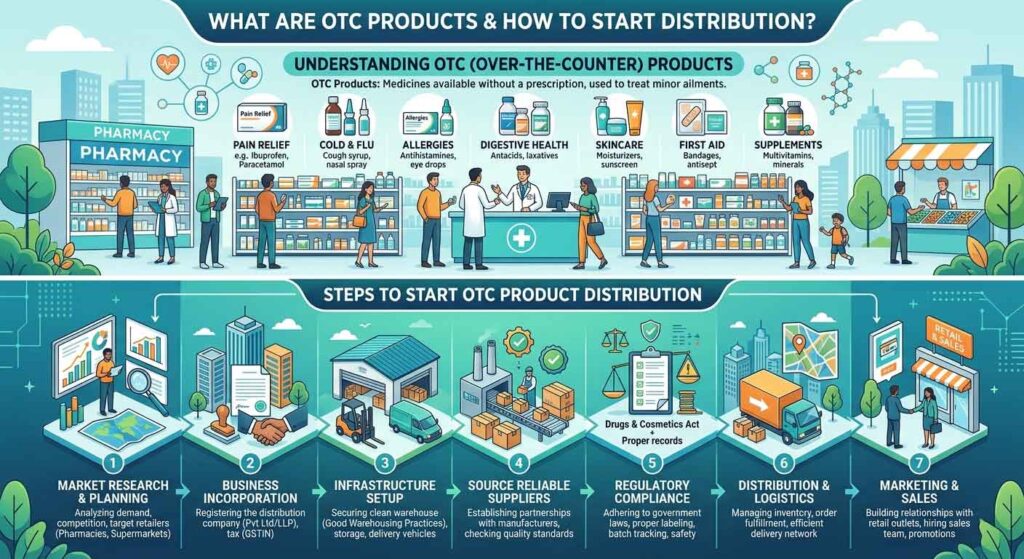
OTC means Over-the-Counter. In simple language, OTC products are products that consumers commonly purchase from pharmacies, chemist shops, hospitals, general stores, supermarkets, or online platforms without presenting a doctor’s prescription.
However, in India, the term OTC should be used carefully. OTC is commonly used in the market, but the legal requirement depends on the actual product category.
A product may be called OTC in the market, but legally it may still be:
A pharmaceutical drug
A food supplement or nutraceutical
A cosmetic
An Ayurvedic or herbal medicine
A medical device
A general healthcare product
Therefore, before starting OTC distribution, the first step is not product promotion. The first step is product classification.
What Are OTC Products in the Pharmaceutical Industry?
OTC products are those healthcare products that are commonly sold directly to customers without a prescription.
But all these products do not have the same licence requirement.
For example, a protein powder may come under FSSAI, while a pain relief gel containing pharmaceutical ingredients may come under drug rules. A face wash may be cosmetic, while an antifungal cream may be a drug. An Ayurvedic cough syrup may come under AYUSH rules.
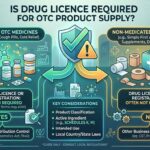
OTC Does Not Always Mean Licence-Free
Many people think that if a product is OTC, no licence is required. This is a wrong assumption.
The correct understanding is:
If the product is legally a drug, a drug licence may be required for sale, stock, wholesale, or distribution, even if it is commonly sold without prescription.
Similarly:
Food supplements need FSSAI licence or registration.
Cosmetics must be manufactured or imported under cosmetic rules.
Ayurvedic medicines must be manufactured by licensed AYUSH manufacturers.
Medical devices may need medical device compliance.
General consumer products may require GST and normal trade compliance.
So, do not start OTC business only on the basis of GST unless product category is clear.
Difference Between OTC Product and Prescription Product
A prescription product is a medicine that should be sold only on the prescription of a registered medical practitioner.
In India, Schedule H, H1, X and other scheduled drugs have specific restrictions and warnings.
OTC-type products are those that are commonly sold without prescription, but the legal classification must be checked.
A product outside Schedule H is not automatically free from all regulation. It may still be a drug, food, cosmetic, AYUSH medicine or medical device.
Common Categories of OTC Products
1. Pharmaceutical OTC Products
These are non-prescription or commonly available medicines that may still fall under drug regulations.
Examples may include:
Pain relief gel
Pain relief spray
Antacid preparations
Certain digestive preparations
Certain antiseptic products
Certain cough and cold preparations
Non-prescription topical preparations
For these products, drug licence may be required for wholesale or distribution if they are legally drugs.
2. Food Supplements and Nutraceuticals
These products generally fall under FSSAI.
Examples include:
Protein powder
Multivitamin food supplements
Nutraceutical capsules
Health drinks
Energy powders
Probiotic supplements
Functional food products
Food for special dietary use
These products should not make disease-cure claims like medicines.
3. Cosmetic and Personal Care Products
These products are used for cleansing, beautifying, improving appearance, or personal care.
These should be manufactured by licensed AYUSH manufacturers and labelled as per applicable rules.
5. Medical Devices and Healthcare Products
Some OTC healthcare items may be medical devices or diagnostic products.
Examples include:
Thermometer
BP monitor
Glucometer
Pregnancy test kit
Pulse oximeter
Nebulizer
Certain diagnostic kits
Regulatory requirement depends on the medical device category.
How to Start OTC Product Distribution in Own Brand
If you want to start OTC product distribution under your own brand, follow these steps.
Step 1: Decide Product Category
First prepare a list of products you want to launch.
For each product, mention:
Product name
Composition
Dosage form
Claim
Target customer
Manufacturer category
Product type
Then classify each product as:
Drug
Food supplement
Cosmetic
Ayurvedic medicine
Medical device
General healthcare product
This classification will decide your licence requirement.
Step 2: Choose Company Name
Choose a professional company name.
Before finalizing, check:
Name availability
Trademark risk
Domain availability
Social media availability
Similar existing pharma brands
Future expansion possibility
A good company name should be simple, memorable, and suitable for healthcare business.
Step 3: Choose Product and Brand Names
Select products according to market demand.
You can start with a limited product range such as:
One pain relief product
One digestive product
One cough or respiratory product
One nutraceutical product
One skincare or personal care product
One Ayurvedic product
Avoid launching too many products in the beginning.
For each product, choose a brand name and check trademark availability.
Step 4: Take Required Licence
Licence depends on product category.
For Pharmaceutical OTC Drugs
You may need:
Wholesale drug licence
GST registration
Proper premises
Competent person
Purchase and sale records
For Food Supplements
You may need:
FSSAI licence or registration
GST registration
Food category compliance
Proper label and claims
For Cosmetics
You may need:
GST for trading
Product from licensed cosmetic manufacturer or registered importer
Proper cosmetic label
Claim compliance
For Ayurvedic Products
You need products manufactured by a licensed AYUSH manufacturer.
For sale/distribution requirement, confirm local state practice and product category from the concerned authority.
For Medical Devices
You may need applicable medical device compliance depending on product classification.
Step 5: Register GST
GST registration is important for:
Purchase
Sale
Interstate supply
B2B billing
Input tax credit
Online sales
Distributor appointment
Hospital supply
Even if drug licence is not required for a particular category, GST may still be required for business billing.
Step 6: Register Trademark
Trademark registration is optional in the starting phase, but highly recommended.
You should consider trademark for:
Company name
Brand names
Logo
Unique product identity
Trademark helps protect your brand from copying and future disputes.
Step 7: Select Third-Party Manufacturer
Most OTC brand owners begin through third-party manufacturing.
Choose manufacturer according to product category:
Pharma manufacturer for drug products
FSSAI manufacturer for nutraceuticals
Cosmetic manufacturer for cosmetics
AYUSH manufacturer for Ayurvedic/herbal medicines
Medical device manufacturer for devices
Before placing order, check:
Licence copy
Product approval
Manufacturing capacity
Minimum order quantity
Packaging quality
Testing facility
Delivery time
Product experience
Documentation support
Step 8: Finalize Packaging and Label
OTC products depend heavily on packaging.
Your label should be:
Attractive
Clear
Legally compliant
Easy to understand
Accurate in claims
Proper in warning and usage instructions
Do not write excessive matter on OTC packs. Customers usually look for:
Product name
Main benefit
Quantity
Usage direction
Safety warning
Manufacturer details
MRP
Batch and expiry
Category identity
For OTC products, simple and clear packaging works better than overcrowded design.
Step 9: Plan Distribution Channel
OTC products can be distributed through:
Pharmacies
Chemist shops
Hospitals
Clinics
General stores, depending on category
Supermarkets
Distributors
Super stockists
Online platforms
Franchise partners
Direct sales team
Institutional supply
For drug-category products, distribution should be through licensed channels.
Step 10: Start Marketing
OTC marketing requires visibility and repeats purchase.
Common OTC marketing methods include:
Chemist-to-chemist promotion
Retail display
Counter display
Posters
Danglers
Leaflets
Product samples, where permitted
Doctor recommendation, where ethical and appropriate
Digital marketing
Social media
Google Business Profile
Local campaigns
WhatsApp catalogue
Product demonstration
Customer education
OTC marketing takes time. Customer demand is not created in one day.
How OTC Products Sell in Market
OTC products usually sell through four forces:
1. Customer Demand
When customers ask for your brand by name, the product becomes strong.
2. Retailer Push
Chemists and retailers play an important role in recommending OTC products.
3. Visibility
Posters, counter display, shelf placement, and packaging help in recall.
4. Repeat Result
If customers feel satisfied with the product, they return and ask for the same brand.
In OTC business, repeat purchase is more important than first sale.
Starting with Limited Products
For beginners, it is better to start with one to five products.
A focused launch helps you manage:
Investment
Stock
Promotion
Packaging
Distributor follow-up
Retailer feedback
Customer response
Expiry risk
If the first products succeed, you can add more products later.
Example: Starting with Two Pharma Products
Suppose you want to launch:
Aceclofenac + Paracetamol tablets
Diclofenac gel
You should first check whether these compositions are prescription drugs, their schedule status, label requirement, product approval, and advertising restrictions.
Such products should be manufactured by a licensed pharmaceutical manufacturer.
For gel products, investment may be higher because laminated tubes often have higher minimum order quantity.
Example: Starting with Ayurvedic Pain Relief Gel and Cough Syrup
For Ayurvedic products, you should select a licensed Ayurvedic third-party manufacturer.
Cough syrup generally requires lower packing investment compared with lami-tube products.
Pain relief gel may require laminated tubes, which can increase packing-material cost and minimum order quantity.
Before finalizing, check:
Formula
Claims
Label matter
MOQ
Packing material cost
Manufacturer licence
Product approval
Stability
Delivery timeline
Investment Required for OTC Distribution
Investment depends on:
Product category
Number of products
MOQ
Packaging type
Third-party manufacturing rate
Licence and registration
Trademark
Design and printing
Promotional material
Sales team
Stockist network
Advertising
Working capital
A single syrup product may need lower investment, while gel, spray, aerosol, lami tube, or cosmetic product may require higher packing investment.
OTC Product Selection Ideas
Common OTC product ideas include:
Pharma-Based OTC-Type Products
Pain relief gel
Pain relief spray
Antacid
Digestive enzyme
Antiseptic liquid
Lozenges
Oral gel
ORS-type products, where compliant
Ayurvedic and Herbal Products
Cough syrup
Digestive syrup
Liver syrup
Pain relief oil
Joint care oil
Herbal tablets
Churna
Immunity support products
Food Supplement Products
Protein powder
Multivitamin supplement
Calcium supplement
Iron supplement
Probiotic
Energy powder
Nutraceutical capsules
Cosmetic Products
Face wash
Anti-acne cosmetic gel, if cosmetic claim
Hair oil
Shampoo
Skin cream
Sunscreen
Moisturizer
Always check legal category before launch.
Can OTC Products Be Advertised?
OTC product advertisement depends on product category and claims.
A product may be advertised only if:
It is not a prescription-only medicine where advertisement is restricted.
It does not make prohibited disease claims.
It does not mislead customers.
It follows applicable drug, food, cosmetic, AYUSH and advertising laws.
It uses approved and supportable claims.
It does not promote unsafe self-medication.
Do not assume that all OTC products can be freely advertised.
Can Pain Relief Gel Be Advertised?
Pain relief gel advertisement depends on composition and claims.
If the product contains pharmaceutical drug ingredients or falls under restricted category, advertising may be restricted.
If the product is a non-prescription topical product, promotion may be possible, but claims should be controlled.
Avoid claims such as:
Cures arthritis permanently
Guaranteed pain cure
Works in every patient
No side effects
Better than all medicines
Safer claims may include:
Helps provide relief from muscular pain
Useful for temporary relief of stiffness
For external use only
Use as directed
Final wording should be checked according to product category.
Can Cough Syrup Be Advertised?
Cough syrup requires extra caution.
Many cough syrups contain ingredients that may fall under prescription schedules or misuse-control concern. Also, cough syrup regulation has become stricter.
Before advertising any cough syrup, check:
Composition
Schedule status
Alcohol content
Codeine or other restricted ingredient
Label warning
Age-related caution
Advertising rules
Product category
Manufacturer approval
Do not advertise cough syrup casually without regulatory review.
Poster Display at Medical Stores
Poster display may be possible for suitable OTC products, but only if the product is legally allowed to be promoted and the poster does not contain misleading or prohibited claims.
Before displaying posters, check:
Product schedule status
Label warning
Advertisement restrictions
Disease claims
Child-use claims
Before/after visuals
False or exaggerated claims
Manufacturer approval
Legal review
Medical-store posters should be simple, accurate and compliant.
Important Packaging Tips for OTC Products
OTC products must communicate quickly.
Packaging should highlight:
Product name
Main benefit
Usage category
Pack size
Key ingredients
Direction of use
Safety warning
External/internal use
Storage instruction
Manufacturer and marketer details
Do not highlight unnecessary technical matter.
For OTC products, the customer should understand the product at first glance.
Important Warning Examples
Depending on product category, warning may include:
For external use only
Keep out of reach of children
Use as directed
Do not apply on broken skin
Consult physician if symptoms persist
Not for veterinary use, if applicable
Store in a cool and dry place
Read label before use
Warnings should be product-specific and legally reviewed.
Chemist-to-Chemist Marketing
For small OTC brands, chemist-to-chemist marketing is a practical starting method.
This means your sales team visits medical stores and pharmacies to introduce the product.
The team should explain:
Product use
Product category
MRP and margin
Scheme
Packaging
Display support
Replacement policy
Customer feedback system
Start from known chemists and local market before expanding.
Advertising Budget for OTC Products
OTC marketing can be expensive.
Advertising may include:
Posters
Counter display
Hoardings
Local newspaper
Digital ads
Social media
Influencer campaigns
Product sampling
Retail visibility
Video promotion
Start with a small budget, measure result, then increase spending.
Do not spend heavily before confirming product response.
Customer Care and Feedback
OTC products are directly used by customers, so feedback is important.
Maintain:
Customer complaint record
Batch number record
Retailer feedback
Product return reason
Adverse reaction complaint record
Quality complaint record
Repeat purchase data
Good customer-care support helps build brand trust.
Common Mistakes in OTC Business
Avoid these mistakes:
Assuming OTC means no licence required
Launching product without classification
Not checking Schedule H/H1/X status
Advertising prescription medicines
Making disease-cure claims
Starting with too many products
Ignoring MOQ and packing cost
Choosing manufacturer only by low rate
Not registering trademark
Not planning retail visibility
Not supporting chemists
Not tracking repeat sales
Ignoring expiry and replacement policy
Using misleading labels or posters
Treating nutraceuticals like medicines
Treating cosmetics like disease-treatment products
Step-by-Step Checklist for OTC Distribution
Prepare product list
Classify each product legally
Check required licence
Register business and GST
Apply for drug licence, FSSAI licence or other required registration
Finalize brand names
Check trademark availability
Select licensed manufacturer
Finalize formula and packing
Check label and claims
Calculate MOQ and investment
Prepare price list
Prepare promotional material
Appoint distributor or stockist
Start chemist-level promotion
Track repeat sales and feedback
Maintain complaint and batch records
Final Thoughts
OTC products can be a good business opportunity in the pharmaceutical, Ayurvedic, nutraceutical, cosmetic and healthcare market. But OTC business should be started with proper classification and compliance.
Do not assume that OTC means licence-free.
For pharmaceutical products, drug licence may be required. For food supplements, FSSAI licence or registration may be required. For cosmetics, cosmetic compliance is required. For Ayurvedic products, licensed AYUSH manufacturing is required. For medical devices, medical device rules may apply.
The best way to start is:
Choose limited products, classify them correctly, get them manufactured from licensed manufacturers, keep claims compliant, and build retail-level demand slowly.
OTC success depends on visibility, product quality, customer trust, retailer support and repeat purchase.
Frequently Asked Questions
1. What are OTC products?
OTC products are products commonly sold over the counter without a doctor’s prescription. These may include non-prescription drugs, supplements, cosmetics, Ayurvedic products, medical devices and healthcare products.
2. Is OTC a legal category in India?
OTC is widely used as a market term, but licence requirement depends on whether the product is a drug, food supplement, cosmetic, AYUSH medicine, medical device or general product.
3. Is drug licence required for OTC products?
Drug licence is required if the OTC product is legally a drug or pharmaceutical preparation and you want to sell, stock or distribute it.
4. Can I start OTC distribution with only GST?
Only for products that do not require additional licence. If the product is a drug, food supplement, cosmetic, AYUSH medicine or medical device, relevant compliance must be checked.
5. Which licence is required for protein powder?
Protein powder generally falls under food supplement or nutraceutical category, so FSSAI licence or registration is usually required.
6. Which licence is required for pain relief gel?
If pain relief gel contains pharmaceutical active ingredients or medicinal claims, it may require drug licence and licensed pharmaceutical manufacturing. If Ayurvedic, it should be manufactured by a licensed AYUSH manufacturer.
7. Can cough syrup be sold as OTC?
It depends on composition and schedule status. Many cough syrups require strict compliance. Always check composition, schedule, warning and current rules before treating it as OTC.
8. Can OTC products be advertised?
Some OTC products can be advertised, but advertisements must not be misleading, must not promote prescription-only medicines, and must not make prohibited disease claims.
9. How many products should I start with?
Beginners should start with limited products, usually one to five, and expand after checking market response.
10. What is the best marketing method for OTC products?
Retail visibility, chemist-to-chemist promotion, customer education, attractive packaging, distributor support, digital marketing and repeat purchase tracking are important for OTC success.
Looking for Ayurvedic Franchise or Distribution Opportunities?
Looking to start an Ayurvedic franchise, become a distributor, or launch your own herbal product range?
Elzac Herbal India offers:
Ayurvedic & Herbal Product Range
Franchise & Distribution Opportunities
Third-Party Manufacturing
Product Development Support
Marketing Guidance
PAN India Business Opportunities
Whether you are an entrepreneur, retailer, distributor, or healthcare professional, our team can help you explore the right business opportunity in the growing Ayurvedic sector.
Ajay Kamboj is an entrepreneur and business owners associated with many Ayurvedic and Pharmaceutical start-ups. With years of experience in Ayurvedic product marketing, pharmaceutical distribution, franchise development, and client relationship management, he regularly shares practical business insights based on real-world experiences. His articles focus on business growth, entrepreneurship, customer management, and lessons learned from the healthcare and wellness industry.
4 responses to “What Are OTC Products and How to Start OTC Product Distribution?”
As suggested above i had all the basic requirements to start OTC products,now iam searching for third party manufacturer and i have the following concerns,Could you pl. clarify
1.Once we identify the third party manufacture is it required to register third part manufacturer name in the manufacturing license ?
2.Can we mfg multiple pdt under one third part manufacturer 3.Is ti required to generate any stability data when we started first batch manufacturing at the identified third party?
Dear Sir/Madam
I would like to start stock remedy distribution company in RSA. Can you please advice with the distribution of these products from wholesalers to consumers. These will be over the counter products.
As suggested above i had all the basic requirements to start OTC products,now iam searching for third party manufacturer and i have the following concerns,Could you pl. clarify
1.Once we identify the third party manufacture is it required to register third part manufacturer name in the manufacturing license ?
2.Can we mfg multiple pdt under one third part manufacturer
3.Is ti required to generate any stability data when we started first batch manufacturing at the identified third party?
Otc pharma intrested for our erea
Dear Sir/Madam
I would like to start stock remedy distribution company in RSA. Can you please advice with the distribution of these products from wholesalers to consumers. These will be over the counter products.
I would like to start own otc Pharma distributon. Could you please advise me from base level?