Many aspiring entrepreneurs contact us with a similar question:
“I want to start my own Pharma Marketing Company, but I have no pharmaceutical background. Is it possible?”
The short answer is Yes, it is possible—but it is not easy.
Every year, professionals from industries such as IT, software development, finance, manufacturing, HR, banking, and consulting enter the pharmaceutical business. Some become highly successful, while others struggle because they underestimate the complexity of the healthcare market.
If you are considering leaving your current profession to start a pharma company, this guide will help you understand the opportunities, challenges, and practical steps involved.
Can a Non-Pharma Professional Start a Pharma Company?
Absolutely.
You do not necessarily need to be a pharmacist, doctor, or medical representative to start a pharma marketing company.
However, you must understand one important fact:
Pharmaceutical marketing is different from most other industries.
Unlike consumer products, where customers make purchasing decisions directly, pharmaceutical sales often involve multiple stakeholders, including:
Doctors
Chemists
Distributors
Stockists
Hospitals
Patients
Understanding this ecosystem takes time.
The Biggest Challenge: Lack of Market Knowledge
Most newcomers assume that:
Good products automatically sell.
Attractive packaging guarantees success.
Lower prices create demand.
In reality, pharmaceutical marketing works differently.
Many successful products succeed because of:
Doctor acceptance
Distributor support
Product availability
Brand trust
Consistent promotion
Without understanding these factors, launching a pharma company becomes difficult.
Should You Quit Your Job Immediately?
For most beginners, the answer is No.
If you currently have a stable income source, consider:
Researching the market first.
Testing business opportunities gradually.
Building industry contacts.
Learning the business model.
Jumping directly into a completely unfamiliar industry increases risk.
Many successful entrepreneurs spend several months researching before making a full-time transition.
Can You Start with a Budget Below ₹1 Lakh?
Technically, yes.
However, the more important question is:
Can you build a sustainable business with that budget?
Your investment may need to cover:
Business registrations
Branding
Packaging
Product manufacturing
Marketing materials
Website development
Working capital
A small budget can help you start, but business growth usually requires additional investment over time.
Which Products Should You Launch?
This is one of the most common questions from beginners.
Unfortunately, there is no universal list of “best 10 products.”
Product demand depends on:
Territory
Products that sell well in one city may perform poorly in another.
Doctor Preferences
Different doctors prefer different molecules and brands.
Market Competition
Highly competitive products may be difficult for new companies.
Customer Demand
Demand varies by region and specialty.
Instead of searching for universal best-sellers, conduct local market research.
How to Conduct Market Research
Before launching products, spend time understanding your target market.
Visit Chemists
Observe which products move quickly.
Talk to Distributors
Understand demand patterns.
Analyze Competitors
Identify products that already have strong market acceptance.
Study Doctor Preferences
Different specialties often have different prescribing habits.
Market research reduces expensive mistakes.
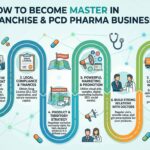
Consider Starting with the Franchise Model First
If you have no industry experience, a Pharma Franchise or PCD model may be safer than launching your own company immediately.
Advantages include:
✔ Lower risk
✔ Existing product portfolio
✔ Business support
✔ Practical learning experience
✔ Reduced investment requirements
Many entrepreneurs gain valuable experience through franchise marketing before launching their own brands.
Build Industry Knowledge Before Building a Company
Understand how products move from manufacturers to customers.
Regulatory Requirements
Learn applicable business and compliance requirements.
Marketing Strategies
Understand how successful companies generate demand.
Knowledge often provides a higher return than initial investment.
Common Mistakes Non-Pharma Entrepreneurs Make
Launching Too Many Products
A focused product range is usually more effective.
Ignoring Market Research
Assumptions can be expensive.
Choosing Products Based Only on Margins
Market demand is more important.
Underestimating Working Capital
Many businesses fail because of cash flow issues.
Expecting Quick Results
Healthcare businesses typically require patience.
A Better Approach for Beginners
If you have no pharma experience, consider this progression:
Phase 1
Learn the industry.
Phase 2
Research products and markets.
Phase 3
Work with distributors and healthcare professionals.
Phase 4
Start a small franchise or distribution operation.
Phase 5
Launch your own products and brand.
This approach significantly reduces risk.
Final Thoughts
Starting a Pharma Marketing Company without prior industry experience is possible, but success depends heavily on preparation, learning, and market understanding.
Rather than focusing only on product selection or startup cost, invest time in understanding:
Market demand
Doctor preferences
Distribution networks
Product positioning
Customer relationships
The pharmaceutical industry offers tremendous opportunities, but it rewards knowledge, patience, and consistent effort.
If you approach the business strategically and continue learning, a non-pharma background does not have to be a barrier to success.
Frequently Asked Questions (FAQs)
Can I start a pharma company without any pharma experience?
Yes. Many entrepreneurs from non-pharma backgrounds have successfully entered the industry. However, learning the market and business model is essential.
Is ₹1 lakh enough to start a pharma marketing company?
A small budget may help you begin, but actual investment requirements depend on products, manufacturing quantities, branding, and marketing activities.
Which products should a beginner launch?
There is no universal answer. Product selection should be based on local market research, doctor preferences, and distributor demand.
Should I quit my job before starting a pharma business?
Many entrepreneurs prefer to research and test opportunities before making a full-time transition, reducing financial risk.
Is the Pharma Franchise model suitable for beginners?
Yes. The franchise model often provides a practical way to learn the industry while requiring lower investment than launching a full-fledged company.
What is the biggest challenge for non-pharma entrepreneurs?
Understanding how pharmaceutical sales, distribution, doctor relationships, and market demand work in practice.
Planning to Start Your Own Pharma or Ayurvedic Marketing Company?
At Elzac Herbal India, we help entrepreneurs, distributors, and healthcare professionals build successful healthcare brands through quality products and business support.
Our Business Support Includes:
✔ Ayurvedic Third-Party Manufacturing
✔ Ayurvedic Branding & Packaging
✔ Franchise & Distribution Opportunities
✔ Marketing Support Materials
✔ Product Portfolio Planning
✔ Business Growth Guidance
Whether you’re launching your first few products or planning a larger ayurvedic brand, our team is ready to assist.
Ajay Kamboj is an entrepreneur and business owners associated with many Ayurvedic and Pharmaceutical start-ups. With years of experience in Ayurvedic product marketing, pharmaceutical distribution, franchise development, and client relationship management, he regularly shares practical business insights based on real-world experiences. His articles focus on business growth, entrepreneurship, customer management, and lessons learned from the healthcare and wellness industry.





Leave a Reply
You must be logged in to post a comment.