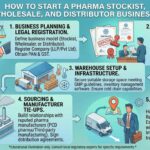
Pharmaceutical wholesale is the business of purchasing medicines and related healthcare products from licensed manufacturers, C&F agents, super stockists, marketing companies or other authorized wholesalers and supplying them to legally eligible buyers.
Typical customers include:
Retail chemists
Hospitals
Nursing homes
Clinics
Institutional pharmacies
Other wholesalers
Government agencies
Pharmacy chains
The business performs an essential supply-chain role by making thousands of products available to retailers in small quantities and at short notice.
However, pharmaceutical wholesale should not be considered an automatically profitable or risk-free business.
A wholesaler may handle a large monthly turnover while earning only a small net profit because substantial money remains blocked in:
Inventory
Retailer credit
Hospital receivables
Expiry claims
Sales returns
Security deposits
GST and cash-flow timing
The correct business objective is not merely:
“Increase sales.”
It is:
Generate profitable sales, collect payments on time, maintain fast-moving inventory and minimize expiry, delivery and financing costs.
Executive Summary
A successful pharmaceutical wholesale business generally requires:
Applicable wholesale drug licences
Suitable licensed premises
An approved competent person
Reliable pharmaceutical suppliers
Batch- and expiry-based inventory software
Adequate opening inventory
Strong delivery capability
Strict customer-credit controls
Expiry and return agreements
Sufficient working capital
The most important conclusion is:
Pharmaceutical wholesale is primarily a working-capital and credit-management business—not merely a medicine trading business.
India’s pharmaceutical industry was valued at approximately USD 60 billion in 2026. Government sources report that the sector’s annual turnover reached approximately ₹4.72 lakh crore in FY 2024–25 and project substantial continued growth through 2030.
This creates continuing opportunities for:
Local distributors
Specialty wholesalers
Hospital suppliers
Generic-medicine wholesalers
Cold-chain distributors
Institutional suppliers
Pharmacy-chain suppliers
Rural and semi-urban distributors
However, growth of the overall pharmaceutical sector does not guarantee profitability for every wholesaler.
Local success still depends on:
Number of pharmacies
Prescribing patterns
Existing distributors
Customer payment behaviour
Hospital purchasing systems
Product availability
Delivery speed
Supplier terms
Local competition
What Does a Pharmaceutical Wholesaler Do?
A pharmaceutical wholesaler performs five core functions.
1. Aggregation
The wholesaler purchases medicines from several companies and keeps them at one location.
A retailer can therefore purchase products from many manufacturers through a smaller number of wholesalers.
2. Breaking Bulk
Manufacturers may dispatch medicines in large quantities.
The wholesaler divides these quantities into smaller orders required by:
Retail chemists
Clinics
Hospitals
Small distributors
3. Inventory Availability
Retailers cannot economically stock every medicine in every strength and pack size.
The wholesaler maintains a wider range and supplies products as required.
4. Delivery
A wholesaler provides daily, alternate-day or scheduled delivery to customers.
5. Credit and Collection
The wholesaler often pays the supplier earlier than it collects money from retailers.
It therefore finances part of the distribution chain.
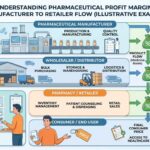
Pharmaceutical Distribution Chain
A traditional distribution structure may be:
Manufacturer → C&F agent → Super stockist → Stockist or distributor → Retail chemist → Patient
A shorter structure may be:
Manufacturer → Distributor → Retail chemist
Institutional supply may follow:
Manufacturer or authorized wholesaler → Hospital or government institution
Every participant does not necessarily appear in every transaction.
Why Manufacturers Use Wholesalers
A pharmaceutical company may have hundreds or thousands of retail customers in one state.
Supplying every retailer directly would require the company to manage:
Small orders
Multiple invoices
Frequent deliveries
Retailer credit
Payment collection
Returns
Expiry
Customer service
A wholesaler consolidates these functions.
Instead of collecting small payments from hundreds of pharmacies, the manufacturer may collect from a limited number of distributors.
Why Retail Pharmacies Use Wholesalers
A pharmacy may stock products from dozens or hundreds of companies.
Without wholesalers, it would have to:
Place separate orders with every company.
Meet individual minimum-order conditions.
Receive many separate deliveries.
Maintain larger quantities.
Manage more supplier accounts.
Wait longer for urgent medicines.
The wholesaler allows a pharmacy to order mixed products in small quantities and receive them quickly.
Types of Pharmaceutical Wholesale Businesses
1. Full-Line Wholesaler
A full-line wholesaler carries a broad portfolio covering:
General medicines
Antibiotics
Cardiac medicines
Diabetes medicines
Gastrointestinal products
Pain medicines
Dermatology
Gynaecology
Paediatrics
OTC products
Advantages:
Wider customer appeal
Larger order value
Better retailer dependence
Diversified revenue
Challenges:
High stock investment
More slow-moving products
Higher expiry exposure
Greater warehouse complexity
2. Short-Line Wholesaler
A short-line wholesaler focuses on selected:
Companies
Therapies
Products
Territories
Advantages:
Lower inventory
Better product knowledge
Easier stock control
Lower operational complexity
Challenges:
Lower order value
Dependence on a few companies
Retailers may prefer full-line suppliers
3. Branded or Ethical Distributor
This wholesaler handles brands promoted by pharmaceutical sales teams.
The company’s representatives generate demand, while the distributor provides:
Availability
Billing
Delivery
Collection
Returns
Trade margins may be relatively structured, but customer service requirements are high.
4. Generic-Medicine Wholesaler
A generic wholesaler competes through:
Price
Schemes
Availability
Manufacturer reputation
Credit
Delivery
The nominal margin may be higher than in branded distribution, but the business may face:
Price wars
Large discounts
Scheme comparison
Quality concerns
Slow-moving duplicate brands
Expiry risk
5. PCD or Franchise Distributor
A PCD distributor may perform both:
Product marketing
Product distribution
It may bear expenses for:
Field staff
Doctor promotion
Samples
Visual aids
Travel
Retailer schemes
Therefore, the difference between MRP and purchase rate is not pure wholesale profit.
6. Hospital and Institutional Supplier
This model supplies:
Hospitals
Nursing homes
Government institutions
Charitable hospitals
Corporate clinics
Medical colleges
Advantages:
High order value
Repeat consumption
Concentrated delivery points
Challenges:
Lower negotiated prices
Long credit periods
Vendor-registration requirements
Tenders
Security deposits
Penalties
Documentation
Payment delays
7. Specialty Distributor
A specialty distributor may focus on:
Oncology
Nephrology
Critical care
Infertility
Vaccines
Biologicals
Rare-disease medicines
High-value injectables
This requires:
Specialist product knowledge
Strong batch traceability
Cold-chain infrastructure
High working capital
Strict security
8. OTC and Consumer-Healthcare Wholesaler
Products may include:
Non-prescription medicines
Consumer-health products
Hygiene products
Basic wellness products
This business depends heavily on:
Retailer reach
Product display
Brand demand
Fast distribution
Promotional schemes
9. Veterinary-Medicine Wholesaler
This model supplies:
Veterinary pharmacies
Animal hospitals
Dairy farms
Poultry businesses
Veterinary practitioners
The product and licence scope should be confirmed carefully.
Each category requires separate regulatory analysis.
A normal drug wholesale licence should not automatically be treated as covering every healthcare product.
Licence Required for Pharmaceutical Wholesale
For ordinary allopathic wholesale operations, the common licences are:
Product category
Licence
Drugs other than Schedule C, C(1) and X
Form 20-B
Schedule C and C(1) drugs, excluding Schedule X
Form 21-B
Schedule X drugs
Form 20-G
Homoeopathic medicines by wholesale
Form 20-D
Applications for Forms 20-B and 21-B are generally submitted in Form 19. Form 20-G uses the applicable Form 19-C route.
Many ordinary allopathic wholesalers require both:
Form 20-B
Form 21-B
Licensing Authority
Sale and distribution of medicines are primarily regulated by State Licensing Authorities.
Applications are commonly processed through the Online National Drugs Licensing System or the applicable state portal.
The exact:
Fee
Portal
Document format
Inspection procedure
Processing time
Local requirement
may differ from state to state.
Licence Retention
Forms 20-B, 21-B and related sale licences remain valid subject to payment of the applicable retention fee before completion of every succeeding five-year period, unless suspended or cancelled.
Failure to pay within the permitted period can result in cancellation.
Minimum Premises Area
The ordinary minimum premises requirement is:
Wholesale only: 10 square metres
Combined retail and wholesale: 15 square metres
The premises should be independent and suitable for the licensed activity.
Ten square metres is only the legal minimum.
It may be inadequate for a business handling:
Hundreds of products
Multiple batches
Cold-chain goods
Sales returns
Expired products
Promotional materials
Competent-Person Qualification
A wholesale premises must be under the charge of a competent person accepted by the Licensing Authority.
Common eligibility routes include:
Registered pharmacist
Graduate from a recognized university with prescribed year’s experience dealing with drugs
Person who has prescribed examination with prescribed experience dealing with drugs
The final approval rests with the State Licensing Authority.
The competent person should be:
Genuinely employed
Available during business operations
Familiar with medicine storage
Familiar with drug schedules
Capable of supervising records
Approved for that premises
Documents Commonly Required
Business Documents
Application form
Fee receipt
PAN
Identity proofs
Entity-constitution documents
Partnership deed
Incorporation documents
Board resolution
Authorized-signatory documents
Non-conviction affidavits
Premises Documents
Ownership deed
Rent or lease agreement
Landlord’s NOC
Electricity or utility bill
Site plan
Key plan
Commercial-use documents
Premises photographs
Competent-Person Documents
Qualification certificates
Mark sheets
Pharmacy registration, where applicable
Experience certificate
Appointment letter
Biodata
Identity proof
Affidavit
Storage Documents
Refrigerator details
Storage-facility declaration
Temperature-control arrangements
Rack and warehouse details
The exact checklist must be obtained from the concerned state authority.
Category-Specific Additional Registrations
Nutraceuticals and Food Supplements
A wholesale drug licence does not replace FSSAI registration or licensing for food-category products.
FoSCoS separately recognizes business activities such as:
Wholesaler
Distributor
Retailer
Storage
The applicable registration or licence depends on the current FSSAI eligibility criteria and business scale.
Medical Devices
A business involved only in the sale, stocking and distribution of regulated medical devices generally requires registration of the premises in:
Form MD-41 application
Form MD-42 certificate
Ayurvedic Medicines
A separate central wholesale drug-sale licence comparable to Forms 20-B and 21-B is not ordinarily prescribed merely for Ayurvedic medicine sale.
However, state-specific shop or establishment requirements may apply.
GST Registration
GST registration depends on:
Turnover
State
Interstate supplies
E-commerce
Compulsory-registration provisions
Agency structure
Most organized pharmaceutical wholesalers obtain GST registration from the beginning because they operate through B2B tax invoices and input-tax credit.
Current GST on Medicines
From 22 September 2025:
Drugs and medicines generally attract 5% GST.
Specifically notified products may be nil-rated.
Medical devices generally attract 5%, subject to specific exemptions.
Profit calculations should use values excluding GST.
GST collected from a customer is not trading income.
Wholesale Margin: What Is Realistic?
NPPA reports that an approximately 10% wholesaler margin is a prevailing industry benchmark for some decontrolled formulations, while approximately 20% is reported for retailers.
These figures:
Do not apply to every product.
Do not represent net profit.
May be affected by schemes.
May vary by company.
May be calculated on different price bases.
Gross Profit Formula
Gross Profit
= Sales Excluding GST
− Cost of Goods Sold Excluding GST
Markup on Purchase Cost
Markup %
= Gross Profit
÷ Purchase Cost
× 100
Gross Margin on Sales
Gross Margin %
= Gross Profit
÷ Sales
× 100
Markup and gross margin are not the same.
Example
Suppose:
Purchase rate: ₹100
Sale rate: ₹110
Gross profit:
₹110 − ₹100 = ₹10
Markup:
₹10 ÷ ₹100 × 100 = 10%
Gross margin:
₹10 ÷ ₹110 × 100 = 9.09%
A “10% margin” may therefore mean different things depending on the agreement.
Schemes and Effective Purchase Rate
A distributor may receive a scheme such as:
10 + 1
Suppose the billed rate is ₹100 per pack.
Payment for 10 packs:
10 × ₹100 = ₹1,000
Total quantity received:
11 packs
Effective rate:
₹1,000 ÷ 11 = ₹90.91 per pack
The scheme improves effective margin, but only if the free quantity is sold without additional discount or expiry loss.
Gross Margin Is Not Net Profit
From gross profit, the wholesaler must pay:
Rent
Salaries
Delivery expenses
Fuel
Software
Interest
Electricity
Insurance
Expiry losses
Damaged goods
Bad debts
Professional expenses
Bank charges
Monthly Profit Scenarios
The following examples are illustrative.
Scenario
Monthly sales ex-GST
Gross margin
Gross profit
Operating expenses
Operating result
Lean
₹15 lakh
9%
₹1.35 lakh
₹1.50 lakh
₹15,000 loss
Developing
₹30 lakh
9.5%
₹2.85 lakh
₹2.50 lakh
₹35,000 profit
Scaled
₹50 lakh
10%
₹5.00 lakh
₹4.00 lakh
₹1.00 lakh profit
The resulting operating margins are:
Lean: −1%
Developing: approximately 1.17%
Scaled: 2%
This demonstrates that a wholesaler can process ₹30–50 lakh of monthly sales while earning only a modest net profit.
Break-Even Sales
Break-Even Sales
= Monthly Operating Expenses
÷ Gross Margin Percentage
Example:
Monthly expenses: ₹2.50 lakh
Average gross margin: 9.5%
Break-Even Sales
= ₹2,50,000 ÷ 9.5%
= approximately ₹26.32 lakh per month
The business must generate more than approximately ₹26.32 lakh of monthly ex-GST sales before earning operating profit.
Working Capital: The Most Important Analysis
A wholesaler’s working-capital cycle is measured through:
Inventory days
Receivable days
Payable days
Inventory Days
Inventory Days
= Average Inventory
÷ Annual Cost of Goods Sold
× 365
Receivable Days
Receivable Days
= Average Trade Receivables
÷ Annual Credit Sales
× 365
Payable Days
Payable Days
= Average Supplier Payables
÷ Annual Credit Purchases
× 365
Cash Conversion Cycle
Cash Conversion Cycle
= Inventory Days
+ Receivable Days
− Payable Days
Example
Suppose:
Inventory days: 30
Customer receivable days: 45
Supplier-credit days: 15
Cash Conversion Cycle
= 30 + 45 − 15
= 60 days
The wholesaler must finance approximately 60 days of operations.
Working-Capital Example
Suppose:
Monthly sales excluding GST: ₹30 lakh
Gross margin: 9.5%
Monthly cost of goods: ₹27.15 lakh
Cash-conversion cycle: 60 days
Average daily cost:
₹27.15 lakh ÷ 30
= ₹90,500
Approximate operating working capital:
₹90,500 × 60
= ₹54.30 lakh
This means a wholesaler generating ₹30 lakh monthly sales may need more than ₹54 lakh to finance inventory and receivables, before adding:
Fixed assets
Deposits
Operating reserve
Expiry claims
Contingency
This is why ₹1–5 lakh startup estimates are often inadequate for a serious credit-based wholesale operation.
Investment Required
There is no fixed minimum investment other than licensing and premises requirements.
Small Focused Wholesaler
Possible characteristics:
Few companies
Limited territory
Advance or short credit
Compact inventory
Owner-operated
Illustrative investment:
₹10–25 lakh
Structured Local Distributor
Possible characteristics:
Several pharmaceutical companies
Daily delivery
Retailer credit
Employees
Wider stock
Illustrative investment:
₹25–75 lakh
Established Multi-Company Wholesaler
Possible characteristics:
Large retailer network
Hospital supply
Delivery fleet
Extensive inventory
Longer credit
Illustrative investment:
₹75 lakh to several crores
These are planning ranges, not statutory minimums.
Illustrative Startup Budget
Investment head
Illustrative amount
Premises deposit and initial rent
₹1.50 lakh
Licensing, entity and professional expenses
₹75,000
Racks, pallets and furniture
₹2.00 lakh
Refrigerator and temperature equipment
₹1.00 lakh
Computer, printer and software
₹1.00 lakh
Delivery vehicle or logistics deposit
₹2.00 lakh
Initial medicine inventory
₹15.00 lakh
Customer-credit reserve
₹10.00 lakh
Six-month operating reserve
₹6.00 lakh
Expiry, damage and contingency reserve
₹2.00 lakh
Illustrative total
₹41.25 lakh
The actual amount depends heavily on supplier and customer credit.
Inventory Strategy
Inventory is the wholesaler’s primary service asset and its largest financial risk.
Too little inventory causes:
Lost sales
Customer dissatisfaction
Emergency purchases
Supplier switching
Too much inventory causes:
Cash blockage
Expiry
Damage
Obsolescence
Low return on capital
ABC Analysis
A Items
High-value products requiring close financial control.
B Items
Moderate-value products requiring regular review.
C Items
Low-value items that may be stocked in broader quantities if movement is reliable.
FSN Analysis
Fast Moving
Products sold regularly and frequently.
Slow Moving
Products with limited or irregular demand.
Non-Moving
Products with no sale during the defined review period.
XYZ Analysis
X Items
Stable and predictable demand.
Y Items
Seasonal or moderately variable demand.
Z Items
Irregular and difficult-to-predict demand.
The strongest system combines these methods.
For example:
AX: high-value, stable-demand product
AZ: high-value, unpredictable-demand product
CZ: low-value, unpredictable product
AZ products require particularly careful purchase decisions.
Minimum and Maximum Stock
Reorder Level
= Average Daily Sale × Supplier Lead Time
+ Safety Stock
Example:
Average daily sale: 10 packs
Supplier lead time: 7 days
Safety stock: 30 packs
Reorder Level
= 10 × 7 + 30
= 100 packs
FEFO
FEFO means:
First Expiry, First Out
The batch with the earliest acceptable expiry should ordinarily be supplied first.
However, do not dispatch short-expiry products merely because they expire first.
Customer shelf-life requirements must also be considered.
Expiry Management
Generate reports for products expiring within:
12 months
9 months
6 months
3 months
1 month
Take action early by:
Stopping further purchase
Returning eligible stock
Transferring stock
Informing sales staff
Increasing visibility
Collecting retailer returns
Segregating expired goods
Expiry Policy with Suppliers
Before accepting a distributorship, obtain written clarity on:
Minimum remaining shelf life
Return window
Claim documents
Freight responsibility
Credit-note timing
Breakage policy
Near-expiry acceptance
Scheme-product return
Closing-stock settlement
A high nominal margin may be unattractive where expiry claims are routinely rejected or delayed.
Credit Management
Credit is often the largest cause of wholesale failure.
A wholesaler may pay suppliers in:
Advance
15 days
30 days
45 days
while retailers may pay after:
30 days
45 days
60 days
Repeated follow-up
The resulting gap must be financed by the wholesaler.
Customer Credit Policy
Every customer should have:
Approved credit limit
Approved credit period
Security or reference
Collection day
Outstanding monitoring
Stop-supply trigger
Suggested Credit Categories
Category A
Strong payment history
Established business
Higher credit limit
Normal supply
Category B
Moderate payment history
Controlled credit
Close monitoring
Category C
New or irregular customer
Advance payment
Small credit limit
Frequent review
Blocked
Cheque returns
Persistent overdue
Unresolved disputes
Invalid licence
Excessive returns
Ageing Report
Monitor outstanding amounts by:
0–30 days
31–45 days
46–60 days
61–90 days
More than 90 days
Overdue sales should not be treated as successful sales.
Bad-Debt Provision
Management should create an internal bad-debt provision based on:
Customer history
Overdue age
Security
Disputes
Legal recoverability
A wholesaler reporting profit without recognizing doubtful receivables may be overstating its actual financial position.
Delivery Economics
A distributor can lose money on frequent small deliveries.
Delivery Cost per Invoice
Delivery Cost per Invoice
= Total Monthly Delivery Cost
÷ Number of Delivered Invoices
Suppose:
Monthly delivery cost: ₹60,000
Delivered invoices: 1,200
Delivery Cost per Invoice
= ₹50
An invoice producing only ₹35 gross profit creates a delivery loss before administration and credit cost.
Minimum Order Value
The wholesaler may set:
Minimum order value
Area-wise delivery days
Emergency delivery fee
Free-delivery threshold
This should be balanced against competitive market conditions.
Route Planning
Group customers by:
Geographic area
Delivery day
Urgency
Collection route
Order size
The same trip should ideally handle:
Delivery
Order collection
Payment collection
Return pickup
Licence-document updates
Warehouse Design
A professional wholesale warehouse should include:
Goods-receiving area
Inward-verification area
Saleable-stock racks
Cold-chain storage
Quarantine area
Returned-goods area
Expired-goods area
Damaged-goods area
Recalled-stock area
Dispatch area
Documentation area
Good Distribution Practices
CDSCO lists official guidance on good distribution practices for pharmaceutical products.
A wholesaler should establish controls for:
Storage
Temperature
Transportation
Documentation
Returns
Complaints
Recalls
Traceability
Temperature Control
Maintain:
Room-temperature records
Refrigerator-temperature records
Alarm or excursion records
Calibration certificates
Power-failure procedure
Backup-power arrangements
Do not rely only on the room air-conditioner display.
Cold-Chain Operations
Cold-chain products may require:
Qualified refrigerator
Calibrated data logger
Temperature alarm
Backup power
Insulated shipping boxes
Ice packs
Dispatch validation
Excursion investigation
A product can remain physically present in stock but become unsuitable for supply after an uncontrolled temperature excursion.
Inward-Goods Procedure
When stock arrives:
Verify supplier licence and invoice.
Count packages.
Check transport damage.
Match product names.
Verify quantities.
Verify batch numbers.
Verify expiry dates.
Verify MRP.
Check storage conditions.
Record shortages.
Enter batch-wise stock.
Segregate discrepancies.
Customer Verification
Before wholesale supply, collect:
Customer legal name
Drug-licence number
Licensed address
GSTIN
Contact person
Delivery address
Credit approval
Exercise caution where:
Delivery is requested at an unlicensed address.
The buyer refuses to share a licence.
The invoice name differs from the licence.
A person asks to purchase prescription stock for personal use.
Schedule medicines are ordered without a suitable business purpose.
Sales and Dispatch Procedure
Receive order.
Verify licence and credit status.
Check product availability.
Allocate batch through FEFO.
Verify shelf life.
Generate invoice.
Pick stock.
Conduct second-person verification.
Pack appropriately.
Generate e-way bill where applicable.
Dispatch.
Obtain proof of delivery.
Returns Management
Returned goods should be placed in quarantine until reviewed.
Record:
Customer
Original invoice
Product
Batch
Expiry
Quantity
Return reason
Pack condition
Storage history
Credit-note status
Do not automatically return customer stock to saleable inventory.
Product Recall System
The system should identify every customer who received an affected batch.
Recall steps include:
Block the batch.
Stop further supply.
Identify customers.
Send notification.
Collect stock.
Reconcile quantities.
Segregate returned stock.
Report to supplier.
Maintain closure records.
Software Requirements
The billing and inventory software should support:
Batch number
Manufacturing date
Expiry
MRP
Purchase rate
GST
Schemes
Supplier
Customer
Licence details
FEFO
Near-expiry alerts
Credit limits
Outstanding ageing
Sales returns
Purchase returns
Credit notes
Recall reports
Profitability reports
Avoid software that records only the product name and total quantity.
Dashboard Metrics
A wholesaler should monitor:
Sales Metrics
Monthly sales
Customer-wise sales
Product-wise sales
Company-wise sales
Gross margin
Working-Capital Metrics
Inventory days
Receivable days
Payable days
Cash-conversion cycle
Overdue receivables
Inventory Metrics
Stock value
Fast-moving stock
Slow-moving stock
Non-moving stock
Near-expiry stock
Expired stock
Service Metrics
Order fill rate
Delivery time
Stock-out rate
Invoice accuracy
Return percentage
Profitability Metrics
Gross profit
Delivery cost
Employee cost
Interest cost
Expiry loss
Bad-debt provision
Net operating profit
Order Fill Rate
Order Fill Rate
= Quantity Supplied
÷ Quantity Ordered
× 100
A high fill rate improves customer retention.
Inventory Turnover
Inventory Turnover
= Annual Cost of Goods Sold
÷ Average Inventory
Higher turnover generally means more efficient inventory use, provided stockouts remain controlled.
Return on Working Capital
Return on Working Capital
= Annual Operating Profit
÷ Average Working Capital
× 100
This is more useful than examining gross margin alone.
Supplier Selection
Evaluate a pharmaceutical company on:
Product demand
Product quality
Market reputation
Trade margin
Schemes
Credit
Supply consistency
Expiry policy
Freight
Product range
Sales-team support
Complaint handling
Do not choose suppliers only because they offer the highest percentage margin.
A lower-margin fast-moving company may produce better annual return than a high-margin slow-moving company.
Supplier Comparison Example
Supplier
Gross margin
Inventory turns per year
Approximate annual gross return on inventory
Company A
8%
12
96%
Company B
18%
3
54%
Company A may create a better return on inventory despite its lower nominal margin.
Customer Profitability
A high-sales customer may be unprofitable because of:
Large discount
Frequent small orders
Long credit
Late payment
High returns
Remote delivery location
Customer Contribution
Customer Contribution
=
Gross Profit From Customer
− Delivery Cost
− Collection Cost
− Credit Cost
− Returns
− Bad-Debt Provision
Business Plan
A wholesale business plan should include:
Market Analysis
Number of retail chemists
Number of hospitals
Existing wholesalers
Leading companies
Product shortages
Payment culture
Delivery expectations
Product Strategy
Branded
Generic
Specialty
OTC
Hospital
Cold chain
Mixed portfolio
Financial Plan
Setup investment
Opening stock
Customer credit
Supplier credit
Monthly expenses
Break-even sales
Contingency
Distribution Plan
Delivery areas
Vehicle
Route days
Emergency orders
Order cut-off
Proof of delivery
Collection Plan
Customer limits
Collection days
Overdue controls
Stop-supply rules
Recovery responsibility
Risk Plan
Expiry
Product recall
Customer default
Supplier loss
Regulatory action
Data loss
Cold-chain failure
Fire or theft
SWOT Analysis
Strengths
Essential product category
Repeat demand
Large customer base
Recurring transactions
Important supply-chain position
Weaknesses
Low net margin
High working-capital need
Expiry risk
Credit dependence
Operational complexity
Opportunities
Specialty medicines
Tier-2 and tier-3 markets
Hospital supply
Cold chain
Digital ordering
Pharmacy chains
Rural distribution
Threats
Price competition
E-pharmacy consolidation
Direct company supply
Customer default
Regulatory changes
Counterfeit products
Supply disruptions
Technology and the Future of Wholesale
Technology is changing traditional distribution through:
Online ordering
Real-time inventory
E-invoicing
Automated replenishment
Data analytics
Route optimization
Digital collections
Pharmacy-chain integration
The future wholesaler is unlikely to succeed only through personal relationships.
It will need to provide:
Fast ordering
Accurate availability
Batch traceability
Digital invoices
Reliable delivery
Transparent outstanding statements
Near-expiry control
Ninety-Day Launch Plan
Days 1–30: Research and Structure
Survey retailers and hospitals.
Select business model.
Prepare investment plan.
Select entity.
Identify competent person.
Shortlist premises.
Contact suppliers.
Days 31–60: Licensing and Setup
Finalize premises.
Execute rent agreement.
Submit licence application.
Complete GST registration.
Install racks and refrigerator.
Select software.
Prepare SOPs.
Days 61–90: Commercial Preparation
Finalize supplier agreements.
Verify customer licences.
Set credit limits.
Purchase controlled opening inventory.
Plan delivery routes.
Begin operations after licence grant.
Common Mistakes
Avoid:
Treating turnover as profit
Beginning with inadequate working capital
Giving credit to every retailer
Launching too many companies
Stocking too many duplicate brands
Ignoring near-expiry reports
Operating without applicable licences
Using another firm’s licence
Appointing a competent person only on paper
Storing medicines at an unlicensed location
Mixing returned goods with saleable stock
Buying from unauthorized brokers
Ignoring customer licence verification
Measuring only gross margin
Providing free delivery on uneconomic orders
Maintaining no recall system
Treating the business as pandemic-proof
Frequently Asked Questions
1. Is pharmaceutical wholesale profitable?
It can be profitable where inventory moves quickly, credit is controlled, delivery is efficient and expiry losses are low. High turnover alone does not guarantee profit.
2. What is the normal wholesale margin?
Approximately 10% is reported as an industry benchmark for some decontrolled formulations. Actual margin varies by product, company, scheme and calculation method.
3. How much investment is required?
A small focused operation may require ₹10–25 lakh, while a structured credit-based distributor commonly requires ₹25–75 lakh or more.
4. Which licences are required?
Forms 20-B and 21-B are commonly required for ordinary allopathic wholesale operations. Form 20-G applies to Schedule X wholesale activity.
5. What is the minimum premises area?
The ordinary minimum is 10 square metres for wholesale-only premises.
6. Is a pharmacist compulsory?
A registered pharmacist is one eligibility route. An approved graduate with prescribed years’ experience may also qualify as competent person.
7. Can a wholesaler sell directly to patients?
Not as ordinary retail dispensing under only a wholesale licence. Retail activity requires the applicable retail licences and pharmacist arrangements.
8. Can one wholesaler handle several companies?
Yes, subject to licence scope, space, agreements, working capital and inventory capacity.
9. Is FSSAI required?
It is required where the business wholesales or distributes food supplements or nutraceuticals.
10. Does the drug wholesale licence cover medical devices?
Not automatically. Sale and distribution of regulated medical devices generally requires MD-42 premises registration.
11. What is the biggest risk?
Customer receivables are often the biggest financial risk, followed by slow-moving and near-expiry stock.
12. What is the most important report?
The combined review of:
Outstanding ageing
Inventory ageing
Near-expiry stock
Product-wise gross profit
provides the clearest view of business health.
Final Analysis
Pharmaceutical wholesale is a necessary and potentially sustainable business, but it is not an easy-margin business.
Its economics can be summarized as:
Net Profit
=
Gross Trade Margin
+ Schemes
+ Cash Discounts
− Delivery Cost
− Staff Cost
− Interest
− Expiry
− Returns
− Bad Debts
− Administration
Its cash requirement can be summarized as:
Working Capital
=
Inventory
+ Customer Receivables
+ Operating Reserve
− Supplier Credit
The strongest wholesaler is not necessarily the one with:
The most companies
The highest turnover
The biggest warehouse
The highest nominal margin
It is the one that achieves:
Fast inventory rotation
Strong payment collection
Low expiry
High order fill rate
Efficient delivery
Accurate batch traceability
Sustainable return on working capital
Looking for Ayurvedic Franchise or Distribution Opportunities?
Looking to start an Ayurvedic franchise, become a distributor, or launch your own herbal product range?
Elzac Herbal India offers:
Ayurvedic & Herbal Product Range
Franchise & Distribution Opportunities
Third-Party Manufacturing Services
Product Development Support
Marketing Guidance
PAN India Business Opportunities
Whether you are an entrepreneur, retailer, distributor, or healthcare professional, our team can help you explore the right business opportunity in the growing Ayurvedic sector.
Ajay Kamboj is an entrepreneur and business owners associated with many Ayurvedic and Pharmaceutical start-ups. With years of experience in Ayurvedic product marketing, pharmaceutical distribution, franchise development, and client relationship management, he regularly shares practical business insights based on real-world experiences. His articles focus on business growth, entrepreneurship, customer management, and lessons learned from the healthcare and wellness industry.