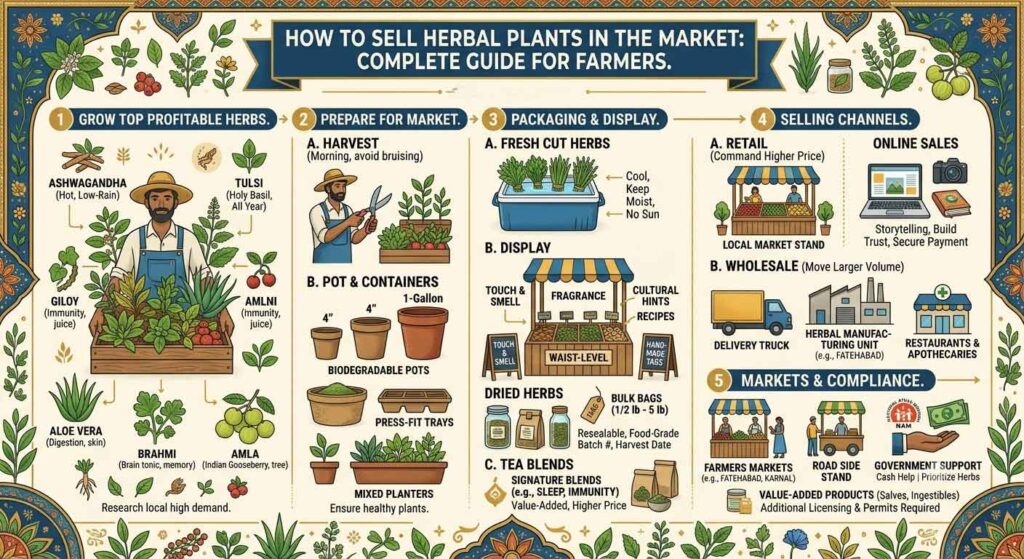
Medicinal and herbal plant farming can be a good opportunity for farmers, but only when it is planned with market demand, buyer contacts, quality standards, and proper harvesting practices.
Many farmers ask:
“I have farmland and want to grow herbal plants. Where can I find buyers, and which herbs should I cultivate?”
The most important answer is:
Do not start cultivation only by hearing that a herb has high demand. First identify buyers, understand quality requirements, check climate suitability, and then start cultivation.
Herbal farming can be profitable, but market linkage is the most important factor.
Who Buys Herbal Plants?
Herbal plants and medicinal raw materials are mainly purchased by:
If you want to sell herbal plants successfully, you should prepare a buyer list before sowing the crop.
First Step: Decide Whether You Want to Sell Fresh or Dry Material
Before cultivation, decide whether you will sell:
Fresh leaves
Dry leaves
Roots
Seeds
Flowers
Bark
Whole plant
Powdered raw material
Essential oil
Extract-grade raw material
Most Ayurvedic and herbal manufacturers prefer properly dried, cleaned, graded, and packed raw material instead of fresh plant material.
For example:
Ashwagandha is usually sold as dry root.
Tulsi may be sold as dry leaf or extract-grade material.
Aloe vera may be sold as fresh leaf or pulp.
Turmeric is sold as dry rhizome or powder.
Kalmegh is usually sold as dried aerial part.
So, the market form of the crop should be clear before cultivation.
How to Find Market for Herbal Plants
1. Contact Ayurvedic and Herbal Manufacturers
The best buyers for medicinal plants are Ayurvedic and herbal manufacturing companies.
You can search for:
Ayurvedic medicine manufacturers
Herbal product manufacturers
Third-party Ayurvedic manufacturers
Herbal extract manufacturers
Herbal cosmetics manufacturers
Nutraceutical companies
Ayurvedic raw material suppliers
Prepare a company directory with:
Company name
Contact person
Phone number
Email ID
Address
Products manufactured
Raw materials used
Purchase department contact
Required herbs
Quality specifications
Purchase terms
After preparing the list, contact them with your crop details.
2. Approach Herbal Raw Material Traders
Many manufacturers purchase from established raw material traders instead of directly from farmers.
You can contact traders dealing in:
Ayurvedic raw herbs
Dry herbs
Spices
Essential oil crops
Herbal extracts
Forest produce
Medicinal plant raw material
Traders can help you understand real market prices, demand, seasonality, and quality expectations.
3. Register on Online Herbal Market Platforms
Farmers can use online platforms to connect with buyers.
Useful online channels include:
e-Charak platform
B2B portals
Agricultural marketplaces
Exporter directories
LinkedIn
Google Business Profile
Own website
WhatsApp business catalogue
Online presence helps buyers find you, especially if you can supply in bulk with proper quality.
4. Visit Mandis and Wholesale Markets
Medicinal plants are also traded through mandis and wholesale markets.
You should visit nearby herbal mandis and raw material markets to check:
Which herbs are sold
Current market price
Quality grading
Buyer demand
Moisture requirements
Packing style
Seasonal price fluctuation
Minimum quantity required
Practical market visits are very important before finalizing a crop.
5. Contact Local AYUSH Department and NMPB-Related Offices
State medicinal plant boards, AYUSH departments, agriculture universities, Krishi Vigyan Kendras, and horticulture departments may provide guidance on:
Suitable medicinal plants for your area
Cultivation training
Nursery sources
Subsidy schemes
Buyer-seller meets
Contract farming opportunities
Processing and drying methods
Government-supported guidance can help you avoid wrong crop selection.
6. Attend Herbal and Agriculture Exhibitions
Trade exhibitions are useful for meeting bulk buyers and suppliers.
You can attend:
Herbal product expos
Ayurveda expos
Agriculture fairs
Organic farming exhibitions
Medicinal plant seminars
AYUSH-related trade events
Buyer-seller meets
Carry crop samples, farm photos, expected production details, and your contact information.
7. Build Direct Buyer Relationships
Direct relationships give better price than selling through middlemen, but they require trust and consistent quality.
To approach buyers, send a professional message containing:
Your name and farm location
Herb name
Botanical name, if known
Cultivation area
Expected quantity
Harvesting month
Fresh or dried form
Organic or conventional status
Sample availability
Price expectation
Packing details
Contact number
Professional communication creates better response.
Which Herbal Plants Can Be Grown?
The right crop depends on your soil, climate, water availability, land size, labour, investment, and buyer demand.
Commonly cultivated medicinal and herbal plants include:
1. Aloe Vera
Aloe vera is widely used in Ayurvedic products, cosmetics, juices, gels, and personal care products.
Possible buyers:
Ayurvedic companies
Cosmetic manufacturers
Aloe vera gel manufacturers
Juice manufacturers
Herbal product companies
Market form:
Fresh leaves
Pulp
Gel-grade material
2. Tulsi
Tulsi is used in cough syrups, herbal teas, immunity products, extracts, oils, and Ayurvedic formulations.
Possible buyers:
Ayurvedic manufacturers
Herbal tea companies
Extract manufacturers
Essential oil processors
Market form:
Dry leaves
Fresh leaves
Seed
Essential oil
3. Ashwagandha
Ashwagandha is one of the popular medicinal crops and is used in Ayurvedic tablets, capsules, powders, and extracts.
Possible buyers:
Ayurvedic medicine manufacturers
Extract manufacturers
Nutraceutical companies
Exporters
Market form:
Dry roots
Powder
Extract-grade raw material
4. Turmeric
Turmeric is used in food, spices, Ayurveda, cosmetics, supplements, and herbal extracts.
Possible buyers:
Spice companies
Ayurvedic companies
Curcumin extract manufacturers
Food companies
Cosmetic companies
Market form:
Dry rhizome
Powder
Extract-grade material
5. Giloy
Giloy is used in many Ayurvedic products and wellness formulations.
Possible buyers:
Ayurvedic medicine manufacturers
Herbal juice companies
Extract manufacturers
Market form:
Fresh stem
Dried stem
Powder
6. Shatavari
Shatavari is used in women’s health, general tonic, and Ayurvedic formulations.
Possible buyers:
Ayurvedic manufacturers
Extract companies
Nutraceutical companies
Market form:
Dry root
Powder
7. Kalmegh
Kalmegh is used in liver-care and bitter tonic formulations.
Possible buyers:
Ayurvedic manufacturers
Extract manufacturers
Herbal raw material traders
Market form:
Dried aerial part
Powder
Extract-grade material
8. Moringa
Moringa is used in food supplements, powders, tablets, capsules, tea, and wellness products.
Possible buyers:
Nutraceutical companies
Food supplement manufacturers
Exporters
Herbal powder brands
Market form:
Dry leaves
Powder
Seeds
9. Lemongrass
Lemongrass is mainly used for essential oil, herbal tea, and fragrance products.
Possible buyers:
Essential oil manufacturers
Herbal tea brands
Cosmetic companies
Aroma product companies
Market form:
Fresh grass
Dried leaves
Essential oil
10. Mint
Mint is used in food, pharma, cosmetics, oral care, and flavour industries.
Possible buyers:
Essential oil processors
Pharma companies
Food companies
Cosmetic companies
Market form:
Leaves
Oil
Dry herb
11. Fennel
Fennel is used in food, digestive products, Ayurvedic formulations, and spice markets.
Possible buyers:
Spice traders
Ayurvedic manufacturers
Digestive product companies
Market form:
Seeds
12. Garlic
Garlic is used in food, nutraceuticals, herbal supplements, and traditional products.
Possible buyers:
Food companies
Herbal product manufacturers
Nutraceutical companies
Market form:
Bulbs
Powder
Extract-grade material
Do Not Choose Crop Only by High Price
Some herbs may look highly profitable on paper, but they may have:
Limited buyers
Long crop duration
Difficult harvesting
High processing cost
Poor local market
Strict quality standards
Price fluctuation
Storage problems
Risk of rejection
Before cultivation, always check:
Who will buy?
At what rate?
In what quantity?
In fresh or dry form?
What quality is required?
What is the payment term?
Who will bear transport cost?
Is there any buy-back agreement?
Best Marketing Methods for Herbal Plants
1. Telemarketing
Call Ayurvedic and herbal companies and ask for their raw material purchase requirements.
Prepare a short introduction before calling.
Example:
“Hello sir, I am a farmer from Haryana/Punjab/Rajasthan. I am cultivating Ashwagandha/Tulsi/Aloe vera and can supply dried raw material in bulk. May I connect with your purchase department?”
2. Email Marketing
Send professional emails to purchase departments.
Your email should include:
Farm details
Crop details
Quantity available
Quality details
Photos
Sample availability
Expected rate
Contact number
3. WhatsApp Marketing
WhatsApp is useful for sending:
Crop photos
Farm videos
Dry material photos
Sample dispatch details
Price list
Harvest updates
Use WhatsApp professionally. Do not spam buyers.
4. Personal Meeting
For bulk business, personal meetings are very effective.
Visit:
Ayurvedic manufacturers
Herbal raw material traders
Extract companies
Local mandis
Herbal industry buyers
Carry samples and basic crop details.
5. Website and Google Business Profile
A simple website can help buyers trust you.
Your website may include:
Farm introduction
Crops cultivated
Product photos
Available quantity
Harvest season
Quality process
Contact details
Inquiry form
Also create a Google Business Profile so buyers can find you locally.
6. B2B Portals
You can list your herbs on B2B platforms.
Mention:
Herb name
Botanical name
Grade
Quantity
Packing
Moisture level
Location
Supply capacity
7. Contract Farming
Contract farming is safer if you are new.
In this model, you grow herbs according to buyer requirement and agreed terms.
Before signing any contract, check:
Rate
Quantity
Quality standards
Rejection conditions
Payment terms
Buy-back clause
Transport responsibility
Seed or sapling quality
Legal enforceability
Quality Requirements for Selling Herbal Plants
Buyers may check quality before purchase.
Important quality factors include:
Correct botanical identity
Clean material
Proper drying
Low moisture
No fungus
No insect infestation
No adulteration
No mixing with other herbs
No excessive soil or stones
Proper colour and odour
Proper packing
Pesticide residue status, if required
Heavy metal status, if required
Microbial quality, if required
If you supply poor-quality herbs, buyers may reject the material or reduce the price.
Processing After Harvest
Many farmers lose value because they do not process herbs properly after harvesting.
Important steps include:
Cleaning
Sorting
Washing, where suitable
Cutting
Drying
Grading
Packing
Labelling
Storage
Transport
Drying should be done carefully. Direct harsh sunlight may reduce quality in some herbs, while poor drying may cause fungal growth.
Packing and Storage
Proper packing improves shelf life and buyer confidence.
Packing may include:
Gunny bags
HDPE bags
Paper bags
Cartons
Vacuum packing, where required
Food-grade or pharma-grade packing, where needed
Storage should be:
Dry
Clean
Pest-free
Protected from moisture
Protected from direct sunlight
Properly ventilated
Batch-wise organized
Documents That Can Help You Sell Better
For small local sales, basic invoice and quality sample may be enough.
For bigger buyers, documents may include:
Farm details
Crop details
Botanical name
Harvest date
Drying method
Packing details
Organic certificate, if available
Pesticide-free declaration, if applicable
Test report, if available
GST invoice, if registered
Transport documents
Sample approval record
If you want to sell to large companies, documentation becomes more important.
Should You Take Organic Certification?
Organic certification can help if you target premium buyers or export markets.
However, certification has cost and documentation requirements.
You should take organic certification only if:
Buyer is ready to pay premium
You can maintain organic farming records
You have proper certification agency
You plan long-term herbal farming
Your target market requires it
Do not spend money on certification without confirmed market benefit.
How to Decide Which Herb to Grow
Before finalizing a crop, check these points:
1. Climate Suitability
Every herb does not grow well in every region.
Check temperature, rainfall, humidity, and season.
2. Soil Suitability
Some herbs prefer sandy soil, some prefer black soil, and some need well-drained loamy soil.
3. Water Requirement
Do not select a water-intensive crop if irrigation is limited.
4. Crop Duration
Some crops mature in 3–4 months, while some take 1–3 years.
5. Buyer Availability
Do not grow any herb unless you know where to sell it.
6. Processing Requirement
Some herbs require drying, oil extraction, root cleaning, grading, or powdering.
7. Price Fluctuation
Check market price for at least the last few seasons if possible.
8. Labour Requirement
Some herbs require more labour for harvesting and processing.
9. Storage Life
Choose crops according to your storage capacity.
10. Buy-Back Possibility
A buy-back arrangement can reduce marketing risk.
Step-by-Step Plan for Farmer
Step 1: Survey Local Market
Visit local mandis, raw herb traders, and Ayurvedic companies.
Step 2: Shortlist 3–5 Herbs
Choose herbs suitable for your soil, climate, and water availability.
Step 3: Contact Buyers Before Cultivation
Do not wait until harvest. Contact buyers before sowing.
Step 4: Take Small Trial Cultivation
Start with small area first. Do not use entire farmland in the first attempt.
Step 5: Use Quality Planting Material
Buy seeds or saplings from reliable sources.
Step 6: Follow Proper Cultivation Practice
Take guidance from agriculture universities, KVK, AYUSH department, or experienced growers.
Step 7: Harvest and Dry Properly
Quality after harvest decides final price.
Step 8: Send Samples to Buyers
Send properly packed samples before bulk sale.
Step 9: Negotiate Rate and Payment Terms
Discuss rate, quantity, transport, and payment clearly.
Step 10: Maintain Buyer Relationship
Regular supply and honest dealing can create repeat business.
Sample Message to Send Buyers
You can send this message to Ayurvedic and herbal companies:
Dear Sir/Madam,
I am a farmer cultivating medicinal and herbal plants. I can supply [Herb Name] in [fresh/dried/root/leaf/seed] form from my farm located at [Location]. Expected quantity is approximately [Quantity] kg, and harvesting will be available from [Month].
We can provide clean, properly dried, and graded material. Sample can be sent for approval. Kindly share your purchase requirement, quality specification, and expected rate.
Herbal plant farming can be a good opportunity, but the market should be planned before cultivation.
The best approach is:
First find buyers, then choose crop, then start cultivation.
Contact Ayurvedic manufacturers, herbal companies, raw material traders, extract manufacturers, mandis, exporters, and online platforms like e-Charak.
Start with a small trial, maintain quality, dry and pack properly, and build long-term relationships with buyers.
In herbal farming, profit depends not only on cultivation. It depends on correct crop selection, quality, processing, market timing, and buyer network.
Frequently Asked Questions
1. Where can I sell herbal plants?
You can sell herbal plants to Ayurvedic manufacturers, herbal companies, raw material traders, extract manufacturers, mandis, exporters, cosmetic companies, nutraceutical companies, and online herbal marketplaces.
2. Which herbal plants are best for farming?
Common options include Aloe vera, Tulsi, Ashwagandha, Turmeric, Giloy, Shatavari, Kalmegh, Moringa, Lemongrass, Mint, Fennel, and Garlic. Final selection should depend on soil, climate, water, and buyer demand.
3. Should I grow herbs before finding buyers?
No. First identify buyers and understand their quality requirements. Then start cultivation.
4. Can Ayurvedic companies buy directly from farmers?
Yes, some Ayurvedic companies buy directly from farmers if quality, quantity, documentation, and supply consistency are suitable.
5. Is e-Charak useful for selling medicinal plants?
Yes, e-Charak is an online platform created for medicinal plant sector stakeholders and can help farmers connect with market information and buyers.
6. Is organic certification required?
Organic certification is not always required, but it can help if your target buyers demand organic material or export-grade supply.
7. What is the biggest challenge in herbal farming?
The biggest challenge is not cultivation but market linkage. Many farmers grow crops first and search buyers later, which creates selling problems.
8. Can I export herbal plants?
Export may be possible, but it requires buyer contacts, quality standards, documentation, packaging, and export compliance. Beginners should first build domestic market experience.
9. Should I sell fresh or dried herbs?
It depends on the herb and buyer requirement. Many manufacturers prefer dried, cleaned, and graded material, while some products like Aloe vera may be sold fresh.
10. How can I get better price for herbal plants?
Better price depends on correct botanical identity, clean material, proper drying, low moisture, grading, documentation, bulk quantity, and direct buyer relationships.
Looking for Ayurvedic Franchise or Distribution Opportunities?
Looking to start an Ayurvedic franchise, become a distributor, or launch your own herbal product range?
Elzac Herbal India offers:
Ayurvedic & Herbal Product Range
Franchise & Distribution Opportunities
Third-Party Manufacturing
Product Development Support
Marketing Guidance
PAN India Business Opportunities
Whether you are an entrepreneur, retailer, distributor, or healthcare professional, our team can help you explore the right business opportunity in the growing Ayurvedic sector.
Ajay Kamboj is an entrepreneur and business owners associated with many Ayurvedic and Pharmaceutical start-ups. With years of experience in Ayurvedic product marketing, pharmaceutical distribution, franchise development, and client relationship management, he regularly shares practical business insights based on real-world experiences. His articles focus on business growth, entrepreneurship, customer management, and lessons learned from the healthcare and wellness industry.






Leave a Reply Cancel reply
You must be logged in to post a comment.