One of the most common questions from new pharma entrepreneurs is:
“I want to establish a Pharma Marketing Company. How much budget should I keep for setting up my office?”
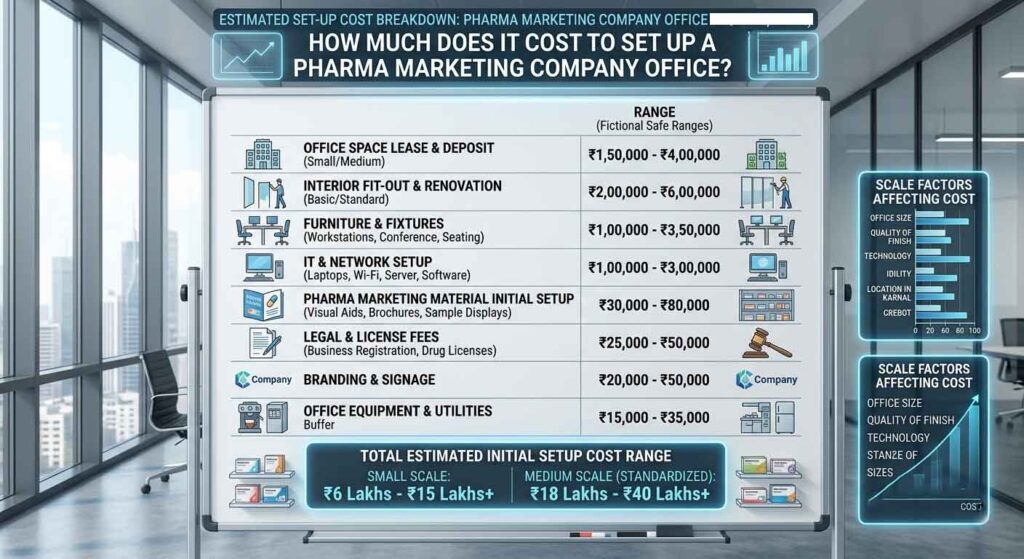
The answer depends on your business model, city, staffing requirements, and whether you plan to maintain your own medicine storage facility.
Many startups focus only on product manufacturing and marketing but underestimate the importance of planning office infrastructure and operational expenses.
Let’s understand the major costs involved.
Do You Need a Large Office to Start?
Not necessarily.
Many successful pharmaceutical marketing companies started with:
A small office
Limited staff
Basic infrastructure
A focused product portfolio
The goal should be functionality and efficiency rather than a luxurious office.
Two Common Office Models for Pharma Marketing Companies
Model 1: Office with Attached Godown (Storage Facility)
In this model:
Office and storage are located at the same premises.
Inventory and dispatch activities are handled from one location.
Operations are easier to monitor.
Advantages
✔ Lower operational complexity
✔ Easier stock management
✔ Reduced coordination issues
✔ Lower rent compared to multiple locations
This model is often preferred by startup and small-scale pharma marketing companies.
Model 2: Separate Office and Godown
In this model:
Administrative office is located separately.
Inventory and dispatch operations are handled from another location.
Advantages
✔ Professional corporate appearance
✔ Better space utilization
✔ Easier expansion
✔ Improved operational segregation
This model is commonly used by larger organizations and growing businesses.
Major Expenses in Pharma Office Setup
1. Office Rent or Premises Cost
Your location significantly impacts costs.
Factors include:
City
Business district
Office size
Accessibility
Office rent is usually one of the largest recurring expenses.
2. Business Registrations and Compliance
Depending on your business model, you may require:
Business registration
GST registration
Drug license (where applicable)
Trademark applications
Other regulatory registrations
Always verify current requirements with qualified professionals.
3. Office Interior and Basic Setup
A functional office generally requires:
Reception area
Workstations
Storage cabinets
Meeting space
Branding materials
Avoid overspending on luxury interiors during the startup phase.
4. Furniture and Equipment
Typical requirements include:
Office desks
Chairs
Storage racks
Filing cabinets
Meeting table
Choose durable and practical furniture.
5. Computers and Technology
Most pharma marketing companies require:
Computers or laptops
Printers
Internet connection
Accounting software
CRM systems
Communication tools
Technology investments often improve productivity significantly.
6. Staff Salary
The number of employees depends on business size.
Common roles include:
Accounts Executive
Handles billing and accounting.
Customer Support Executive
Manages inquiries and follow-ups.
Dispatch Coordinator
Coordinates logistics and shipments.
Marketing Staff
Supports sales and distributor development.
Many startups begin with a small team and expand gradually.
7. Communication Expenses
These may include:
Mobile phones
Internet services
Email systems
Business communication platforms
Reliable communication is essential for franchise and distributor management.
8. Utility Expenses
Regular operating costs include:
Electricity
Water
Maintenance
Housekeeping
These costs should be included in your monthly budget planning.
9. Software and Business Systems
Modern pharma companies increasingly use:
Accounting software
Inventory management systems
CRM software
ERP platforms
Even small companies benefit from basic digital systems.
10. Marketing Infrastructure
Many entrepreneurs overlook marketing setup costs.
Consider:
Product catalogs
Visual aids
Business cards
Company website
Digital marketing assets
Marketing materials are essential for business growth.
Sample Budget Categories
Your office setup budget generally consists of:
One-Time Expenses
Furniture
Computers
Branding
Registrations
Initial setup
Recurring Monthly Expenses
Rent
Salaries
Internet
Utilities
Software subscriptions
Communication costs
Understanding this difference helps with financial planning.
How Can Startups Reduce Costs?
Start Small
Avoid renting a large office immediately.
Hire Gradually
Build your team as sales increase.
Use Digital Systems
Cloud-based tools often reduce operating costs.
Focus on Marketing
Invest more in customer acquisition than luxury office infrastructure.
Scale with Growth
Expand facilities only when business justifies the expense.
Common Mistakes New Pharma Entrepreneurs Make
Overspending on Office Interiors
Customers buy products and service—not expensive furniture.
Hiring Too Many Employees Initially
Keep staffing aligned with business volume.
Ignoring Working Capital
Inventory and cash flow are often more important than office appearance.
Underestimating Monthly Expenses
Recurring costs can impact profitability significantly.
Delaying Technology Adoption
Digital systems improve efficiency and reduce errors.
Final Thoughts
The cost of setting up a pharma marketing company office depends on your location, business model, staffing plan, and operational goals.
Instead of focusing on creating a large corporate office immediately, focus on building:
Strong products
Reliable operations
Efficient systems
Good customer service
Sustainable cash flow
A modest but well-managed office can support significant business growth, especially during the early stages of a pharmaceutical marketing venture.
Frequently Asked Questions (FAQs)
Do I need a large office to start a pharma marketing company?
No. Many successful companies begin with a small office and expand as the business grows.
Is it better to have an office with an attached godown?
For many startups, an attached office and storage facility can simplify inventory and dispatch management.
What are the biggest office setup expenses?
Rent, staff salaries, technology infrastructure, furniture, and regulatory compliance are typically the major expenses.
How many employees are needed initially?
Many startups begin with a small team and increase staffing as sales and operations grow.
Should I invest heavily in office interiors?
Most experts recommend prioritizing product quality, marketing, and customer service over luxury office infrastructure.
What recurring monthly expenses should I budget for?
Common monthly expenses include rent, salaries, utilities, internet, communication services, software subscriptions, and maintenance.
Looking for a Reliable Ayurvedic Franchise Partner?
At Elzac Herbal India, we believe successful franchise businesses are built on quality products, transparent business practices, and long-term relationships.
Why Choose Elzac Herbal India?
Extensive Ayurvedic Product Portfolio
Competitive Business Margins
Franchise & Distribution Opportunities
Marketing Support Materials
Reliable Product Availability
Business Guidance
Long-Term Partnership Approach
Whether you’re starting your first franchise business or expanding an existing healthcare venture, our team is ready to help you grow sustainably.
Ajay Kamboj is an entrepreneur and business owners associated with many Ayurvedic and Pharmaceutical start-ups. With years of experience in Ayurvedic product marketing, pharmaceutical distribution, franchise development, and client relationship management, he regularly shares practical business insights based on real-world experiences. His articles focus on business growth, entrepreneurship, customer management, and lessons learned from the healthcare and wellness industry.





Leave a Reply
You must be logged in to post a comment.