Many dentists, traders, cosmetic brands and healthcare startups want to launch toothpaste, mouthwash or oral-care products under their own brand name.
A common question is:
“Do we need a drug licence number for sale, purchase, marketing or third-party manufacturing of mouthwash and toothpaste?”
The answer depends on the product category.
Some mouthwash and toothpaste products may fall under the cosmetic category. Some may fall under drug category if they contain medicinal ingredients or make therapeutic claims. Ayurvedic or herbal oral-care products may have a different route depending on composition and claims.
Therefore, do not decide only by product name. Decide by composition, intended use, label claims and manufacturing licence.
Quick Answer
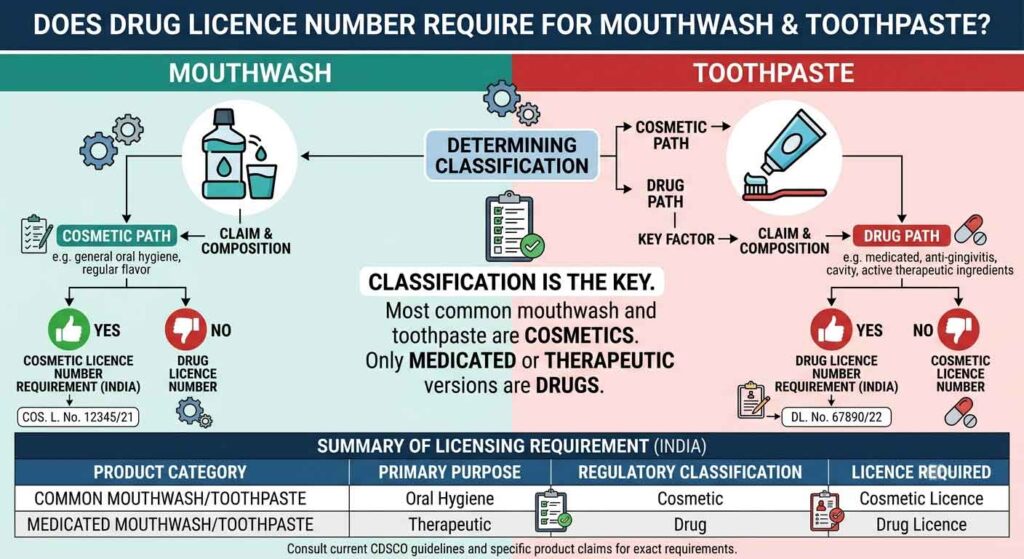
For ordinary toothpaste and mouthwash used for cleaning, freshness and oral hygiene, the product may fall under cosmetics.
For medicated mouthwash or toothpaste used for treating gum disease, infection, plaque, dental disease, sensitivity, pain or any therapeutic condition, drug licence requirement should be checked.
A mouthwash containing ingredients such as Chlorhexidine Gluconate and promoted as anti-plaque or anti-microbial should not be treated as ordinary cosmetic without regulatory confirmation.
Is Toothpaste a Cosmetic or Drug?
Toothpaste can be a cosmetic when it is used for:
Cleaning teeth
Freshening breath
Maintaining oral hygiene
Removing food particles
General tooth-care purpose
But toothpaste may become a drug or medicated preparation if it claims to:
Treat dental disease
Cure gum infection
Prevent or treat gingivitis
Treat tooth sensitivity
Treat oral infection
Provide therapeutic antibacterial effect
Treat pain or inflammation
The classification depends on ingredients and claims.
Is Mouthwash a Cosmetic or Drug?
Mouthwash can be a cosmetic when it is used for:
Mouth freshness
Oral hygiene
Bad breath control
General mouth cleansing
Cosmetic oral-care purpose
But mouthwash may be treated as a drug if it contains medicinal actives or makes claims such as:
Anti-plaque
Anti-microbial
Treatment of gingivitis
Treatment of gum infection
Prevention of dental disease
Treatment of mouth ulcers
Treatment of oral infection
Therapeutic antibacterial action
So, mouthwash classification must be checked carefully before launching.
Does Drug Licence Require for Selling Toothpaste?
If toothpaste is a cosmetic product, a wholesale drug licence is generally not required only for trading or selling it as a cosmetic.
However, the product must be manufactured or imported under the applicable cosmetic rules and must be properly labelled.
If the toothpaste is medicated and falls under drug category, then drug licence requirements may apply for sale, purchase, stocking, distribution and marketing.
Does Drug Licence Require for Selling Mouthwash?
For ordinary cosmetic mouthwash, a drug sale licence may not be required only for trading or marketing.
But for medicated mouthwash containing drug ingredients or therapeutic claims, a drug licence may be required.
If you are stocking, selling or distributing medicated mouthwash as a drug, you should have the applicable wholesale drug licence or operate through proper licensed channels.
Difference Between Cosmetic Mouthwash and Medicated Mouthwash
If it is manufactured by a third-party manufacturer, the manufacturer should have the proper cosmetic manufacturing licence and product compliance.
If toothpaste is classified as drug, drug manufacturing licence and product approval requirements should be checked.
What Licence Is Required for Manufacturing Mouthwash?
If mouthwash is classified as cosmetic, cosmetic manufacturing licence is required for manufacturing.
If mouthwash is medicated or drug-category, then it should be manufactured by a licensed drug manufacturer under applicable drug rules.
For third-party manufacturing, always confirm the manufacturer’s licence category before finalizing the product.
Do I Need Licence for Marketing Toothpaste or Mouthwash Under My Own Brand?
For marketing under your own brand, requirements depend on product category.
If Product Is Cosmetic
You may need:
Firm or company registration
GST registration, where applicable
Agreement with cosmetic manufacturer
Trademark application for brand name
Proper label and artwork
Manufacturer’s cosmetic licence details
Legal Metrology compliance, where applicable
Product safety and quality documents
A separate drug sale licence is generally not required only for marketing ordinary cosmetic toothpaste or mouthwash.
If Product Is Drug
You may need:
Wholesale drug licence for stocking, sale or distribution
GST registration
Agreement with licensed drug manufacturer
Product permission documents
Proper label approval
Batch documents and COA
Correct marketed by address
Compliance with drug sale and storage rules
If Product Is Ayurvedic
You may need:
AYUSH manufacturing licence through manufacturer
Marketing agreement
GST registration
Product label compliance
Proof of formulation and claims
Wholesale or distribution requirement depending on state and product handling
Third-Party Manufacturing Procedure for Mouthwash
If you are a dentist or entrepreneur and want to launch mouthwash under your own brand, follow these steps.
Step 1: Finalize Product Category
First decide whether the mouthwash will be:
Cosmetic mouthwash
Medicated mouthwash
Ayurvedic mouthwash
Herbal cosmetic mouthwash
This decision should be made before label design and manufacturing.
Step 2: Finalize Composition
Prepare the formula or select formula from manufacturer.
Check ingredients such as:
Chlorhexidine
Sodium fluoride
Zinc chloride
Triclosan
Xylitol
Essential oils
Herbal extracts
Alcohol content
Preservatives
Colour
Flavour
Ingredients decide category and licence route.
Step 3: Decide Claims
Claims are very important.
Safe cosmetic claims may include:
Helps freshen breath
Helps maintain oral hygiene
Cleans mouth
Gives fresh feeling
Supports daily oral-care routine
High-risk therapeutic claims include:
Treats gum disease
Kills oral infection
Anti-plaque treatment
Anti-microbial therapy
Treats gingivitis
Prevents dental disease
Prescribed for infection
Therapeutic claims may move the product toward drug category.
Step 4: Choose Licensed Manufacturer
Choose manufacturer according to product category.
For cosmetic mouthwash:
Select a cosmetic licensed manufacturer.
For medicated mouthwash:
Select a drug licensed manufacturer.
For Ayurvedic mouthwash:
Select an AYUSH licensed manufacturer.
Do not select manufacturer only by low rate.
Step 5: Check Documentation
Ask the manufacturer for:
Manufacturing licence copy
Product permission or approval, where applicable
Formula confirmation
COA
Batch records
Label compliance confirmation
GST invoice
Agreement copy
Step 6: Create Brand Name
Select a unique brand name and check trademark availability.
Apply for trademark before investing in large packing material.
Step 7: Prepare Label Artwork
Label should include mandatory details such as:
Product name
Net quantity
Batch number
Manufacturing date
Expiry or best before
MRP
Manufacturer name and address
Licence number, where applicable
Marketed by name and address
Ingredients
Directions for use
Caution and warning
Storage condition
Customer-care details
Final label should be checked by manufacturer’s regulatory or QA team.
Step 8: Sign Agreement
Execute a written third-party manufacturing or manufacturer–marketer agreement.
The agreement should cover:
Product name
Composition
Manufacturing responsibility
Marketing responsibility
Quality documents
Label approval
Batch supply
Payment terms
Complaint handling
Product recall
Trademark and brand ownership
Step 9: Place Order
After documentation and artwork approval, place your order.
Understand:
Minimum order quantity
Packing material cost
Delivery time
Testing time
Payment terms
GST
Transport charges
Step 10: Maintain Records
Keep proper records of:
Purchase invoice
Sale invoice
Batch number
Expiry date
COA
Stock register
Complaint record
Return record
Distributor details
Example: Chlorhexidine Gluconate Mouthwash
Suppose your proposed product is:
Chlorhexidine Gluconate 0.2% w/v
Sodium Fluoride 226 ppm
Zinc Chloride 0.09% w/v
Triclosan 0.3% w/v
Xylitol
And the claim is:
Anti-plaque
Anti-microbial oral rinse
This type of product should be treated carefully.
Because it contains active ingredients and therapeutic-sounding claims, you should not market it as an ordinary cosmetic mouthwash without regulatory confirmation.
For such a product, consult:
State Drug Control Department
Licensed drug manufacturer
Regulatory consultant
Dental product compliance expert
In most practical cases, this kind of mouthwash may require drug-category handling and drug licence compliance for sale, stocking and distribution.
Can a Dentist Launch Own Mouthwash Brand?
Yes, a dentist can launch an own-brand mouthwash, but the correct compliance route must be followed.
A dentist may launch through:
Cosmetic third-party manufacturing
Drug third-party manufacturing
Ayurvedic third-party manufacturing
Own manufacturing unit, if licensed
If the dentist wants to stock and sell drug-category products, wholesale or retail drug licence requirement should be checked.
If selling only as a professional dental clinic product, state-specific rules and billing model should still be checked.
Can I Start Toothpaste or Mouthwash Marketing Company Without Pharmacist?
For cosmetic toothpaste or cosmetic mouthwash, pharmacist requirement may not apply like a drug licence.
For drug-category mouthwash or medicated toothpaste, wholesale drug licence may require a registered pharmacist or competent person as per state rules.
If you are not eligible personally, you may:
Appoint a competent person
Hire a registered pharmacist
Start in partnership with eligible person
Work through licensed distributor
Get regulatory advice before starting
Can I Resell Mouthwash Without Licence?
If the mouthwash is a cosmetic product and you are only reselling properly labelled goods, drug sale licence may not be required.
But you should have:
Purchase invoice
GST compliance
Proper storage
Proper label
Manufacturer details
Legal Metrology compliance
No misleading claims
If it is a medicated mouthwash, drug licence requirements may apply.
Can I Sell Toothpaste and Mouthwash Online?
Yes, but online sale must follow product-category rules.
Before selling online, check:
Product category
GST
Marketplace requirement
Label compliance
Claims compliance
Drug licence requirement, if applicable
Storage and dispatch norms
Marketplaces may ask for additional documents.
Can I Use “Anti-Bacterial” or “Anti-Microbial” Claim?
Use such claims carefully.
Claims like anti-bacterial, anti-microbial, anti-plaque, anti-gingivitis or infection-control may be treated as therapeutic or medicated claims depending on product composition and presentation.
If you want to use these claims, take written regulatory opinion and ensure the manufacturer has the correct licence and approval.
Common Mistakes to Avoid
Avoid these mistakes:
Assuming all mouthwash is cosmetic
Assuming all toothpaste is cosmetic
Using Chlorhexidine mouthwash as ordinary cosmetic
Making anti-microbial claims without checking licence
Selling drug-category oral rinse without wholesale drug licence
Choosing manufacturer without checking licence
Printing label before regulatory review
Using FSSAI route for toothpaste or mouthwash without proper basis
Not applying for trademark
Not maintaining purchase and sale records
Copying competitor label blindly
Not checking state-specific rules
Practical Checklist Before Launch
Before launching mouthwash or toothpaste, check:
Final composition
Product category
Manufacturer licence type
Claim wording
Label artwork
Brand name and trademark
GST registration
Sale licence requirement
Storage requirement
Agreement with manufacturer
Batch documents
COA
MRP and Legal Metrology compliance
Distribution model
Online sale compliance
Final Answer
Drug licence requirement for mouthwash and toothpaste depends on product classification.
Ordinary toothpaste and mouthwash for cleaning, freshness and oral hygiene may fall under cosmetic category. For such products, cosmetic manufacturing compliance is required, but ordinary marketing or resale may not require a drug sale licence.
Medicated toothpaste or mouthwash containing active drug ingredients or therapeutic claims may require drug licence compliance.
A Chlorhexidine Gluconate 0.2% anti-plaque, anti-microbial mouthwash should be treated as a medicated product and should not be launched under ordinary cosmetic route without confirmation from the State Drug Authority or a qualified regulatory professional.
For safe business, finalize composition first, then decide category, manufacturer licence, sale licence and label claims.
Frequently Asked Questions
1. Does toothpaste require drug licence?
Ordinary toothpaste may fall under cosmetic category. Medicated toothpaste may require drug-category compliance depending on ingredients and claims.
2. Does mouthwash require drug licence?
Ordinary cosmetic mouthwash may not require drug sale licence for resale. Medicated mouthwash may require drug licence compliance.
3. Is Chlorhexidine mouthwash a drug?
Chlorhexidine mouthwash with anti-plaque or anti-microbial claims should be treated as medicated and checked under drug-category compliance.
4. Can I sell cosmetic mouthwash without wholesale drug licence?
If it is genuinely cosmetic and properly manufactured, wholesale drug licence may not be required for ordinary resale. GST and other business compliances may still apply.
5. Can I get mouthwash manufactured under my own brand?
Yes. You can get mouthwash manufactured through third-party manufacturing from a licensed manufacturer according to product category.
6. Which licence is required for toothpaste manufacturing?
Cosmetic toothpaste requires cosmetic manufacturing licence. Medicated toothpaste may require drug manufacturing compliance.
7. Is FSSAI required for toothpaste?
Usually no, because toothpaste is not a food product. It is generally cosmetic or drug depending on category.
8. Can a dentist launch mouthwash brand?
Yes, a dentist can launch a mouthwash brand through a properly licensed manufacturer and correct regulatory route.
9. Can I use anti-plaque claim on mouthwash?
Anti-plaque claim may be treated as therapeutic depending on formulation. Take regulatory advice before using it.
10. What is the safest way to launch mouthwash?
Finalize formula, check classification, select licensed manufacturer, review label, sign agreement, keep documents and confirm sale licence requirement before launch.
Looking for Ayurvedic Franchise or Distribution Opportunities?
Looking to start an Ayurvedic franchise, become a distributor, or launch your own herbal product range?
Elzac Herbal India offers:
Ayurvedic & Herbal Product Range
Franchise & Distribution Opportunities
Third-Party Manufacturing Services
Product Development Support
Marketing Guidance
PAN India Business Opportunities
Whether you are an entrepreneur, retailer, distributor, or healthcare professional, our team can help you explore the right business opportunity in the growing Ayurvedic sector.
Ajay Kamboj is an entrepreneur and business owners associated with many Ayurvedic and Pharmaceutical start-ups. With years of experience in Ayurvedic product marketing, pharmaceutical distribution, franchise development, and client relationship management, he regularly shares practical business insights based on real-world experiences. His articles focus on business growth, entrepreneurship, customer management, and lessons learned from the healthcare and wellness industry.
One response to “Does Drug Licence Number Require for Mouthwash and Toothpaste?”






Ayurvedic paste