Many food, nutraceutical and FMCG companies want to enter the OTC healthcare segment with products such as antacids, pain relief gels, sprays, vitamin tablets, digestive products and wellness supplements.
A common question is:
Do OTC healthcare products require an allopathic drug licence?
The answer depends on the legal classification of the product.
A product may be called “OTC” in common business language, but if it is legally classified as a drug, it generally requires the applicable drug licence for manufacture, sale, stocking or distribution.
Before launching any OTC healthcare product, you must understand whether the product is:
An allopathic medicine
A food supplement
A nutraceutical
An Ayurvedic product
A cosmetic
A medical device
A general wellness product
This classification decides the licence requirement.
Quick Answer
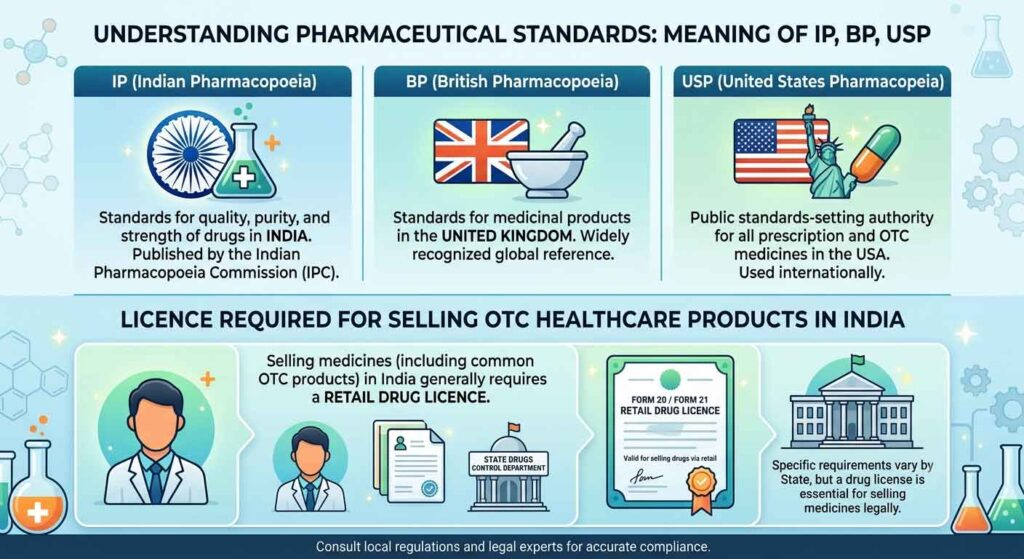
IP, BP and USP are pharmacopoeial standards used in medicine.
IP means Indian Pharmacopoeia
BP means British Pharmacopoeia
USP means United States Pharmacopeia
If ingredients on a product label are written with IP, BP or USP standards, it generally indicates that the ingredient follows a recognized pharmaceutical quality standard.
However, IP/BP/USP alone does not decide whether a product is a drug, food supplement or cosmetic. The final classification depends on ingredients, claims, dosage form, intended use and applicable regulations.
What Is IP?
IP stands for Indian Pharmacopoeia.
Indian Pharmacopoeia is the official book of standards for drugs in India. It provides quality standards for identity, purity, strength and testing of pharmaceutical substances and formulations.
When an ingredient is written as “Paracetamol IP” or “Diclofenac Diethylamine IP,” it means the ingredient should comply with Indian Pharmacopoeia standards.
What Is BP?
BP stands for British Pharmacopoeia.
British Pharmacopoeia provides official standards for pharmaceutical substances and medicinal products in the United Kingdom. BP standards are also referred to in many countries for quality-control purposes.
When an ingredient is written as “Menthol BP” or “Methyl Salicylate BP,” it means the ingredient complies with British Pharmacopoeia standards.
What Is USP?
USP stands for United States Pharmacopeia.
USP provides quality standards for medicines, dietary supplements and other healthcare-related substances. USP standards are widely recognized internationally.
When an ingredient is written as “Calcium Carbonate USP” or “Vitamin C USP,” it means the ingredient complies with USP quality standards.
Why Are IP, BP and USP Written After Ingredients?
IP, BP and USP are written after ingredients to show the quality standard followed by that ingredient.
For example:
Paracetamol IP
Diclofenac Sodium IP
Methyl Salicylate BP
Calcium Carbonate USP
Vitamin D3 IP
These references help indicate the official standard used for raw material quality and testing.
They are especially important in pharmaceutical manufacturing because medicines must comply with prescribed quality standards.
Does IP/BP/USP Mean the Product Is a Medicine?
Not always.
IP/BP/USP indicates quality standard of the ingredient. It does not alone decide the legal category of the finished product.
The product category depends on:
Ingredients used
Quantity or strength
Dosage form
Intended use
Label claims
Promotional claims
Route of administration
Applicable law
For example, a vitamin ingredient may be used in a medicine, nutraceutical or food supplement depending on formulation and claims.
However, pain relief gels, antacids and medicated sprays with pharmacopoeial active ingredients are usually treated as drug products when they make therapeutic claims.
What Is an OTC Product?
OTC stands for Over the Counter.
In common language, OTC products are products that consumers can buy without a doctor’s prescription.
Examples may include:
Some antacids
Pain relief gels
Pain relief sprays
Digestive products
Some vitamin and mineral preparations
Oral rehydration products
Cough and cold products, subject to current rules
General wellness products
However, in India, the term OTC should be used carefully.
A product may be sold without prescription, but it may still be legally classified as a drug and may require a drug licence for sale, stocking and distribution.
Does Every OTC Product Require Drug Licence?
No single answer applies to every product.
The licence depends on product classification.
1. If the Product Is an Allopathic Drug
If the product is an allopathic medicine, it generally requires the applicable drug licence.
This applies even if the product is commonly sold without prescription.
Examples may include:
Allopathic antacid medicines
Pain relief gels containing drug ingredients
Pain relief sprays containing drug ingredients
Medicated tablets
Certain vitamin medicines
Certain cough and cold products
Topical medicated preparations
If you want to stock, sell or distribute allopathic drug products, you should check whether a wholesale drug licence, retail drug licence or other applicable permission is required.
2. If the Product Is a Food Supplement or Nutraceutical
If the product is legally classified as a food supplement or nutraceutical, it may fall under the food regulatory framework instead of drug licensing.
Examples may include certain:
Nutrition tablets
Protein products
Vitamin supplements
Mineral supplements
Health supplements
Functional foods
However, such products must not make disease treatment or cure claims.
If a food supplement claims to treat acidity, pain, inflammation, infection or disease, it may be questioned as a drug claim.
3. If the Product Is Ayurvedic
If the product is an Ayurvedic medicine or Ayurvedic proprietary medicine, it must be manufactured under the applicable Ayurvedic drug licence.
Ayurvedic products follow different rules from allopathic medicines.
Examples may include:
Ayurvedic digestive tablets
Ayurvedic pain oil
Ayurvedic joint care formulations
Herbal wellness syrups
Ayurvedic churna
Classical Ayurvedic medicines
4. If the Product Is Cosmetic
If the product is meant only for external cleansing, beautifying or improving appearance, it may fall under cosmetics.
Examples may include:
Skin creams
Hair oils
Lotions
Shampoos
Face washes
Cosmetic gels
But if the product claims to treat pain, infection, inflammation, disease or a medical condition, it may not remain a cosmetic.
Question 1: Which Medicines Do Not Require Allopathic Drug Licence?
If a product is legally classified as an allopathic medicine, it generally requires the applicable drug licence.
The safer way to understand this is:
Medicines require drug licensing unless a specific legal exemption applies.
Products that may not require an allopathic drug licence include those that are not classified as allopathic drugs, such as:
Properly classified food supplements
Nutraceuticals
Certain general wellness products
Cosmetics without therapeutic claims
Ayurvedic products manufactured under AYUSH licence
Non-drug consumer products
However, these products may require other licences such as FSSAI, cosmetic licence, AYUSH licence, GST registration or other approvals depending on product category.
Do not decide licence requirement only from market practice. Always check the actual product composition and claims.
Question 2: Can Pain Relief Gel or Spray With IP/BP Ingredients Be Sold Without Drug Licence?
Generally, no.
Most pain relief gels and sprays containing pharmacopoeial ingredients such as IP or BP actives are treated as drug products when they are promoted for pain relief, inflammation, sprain, joint pain, back pain or similar therapeutic uses.
If you want to market such products, you should ensure:
The product is manufactured by a licensed manufacturer
The correct drug licence is available
The label complies with drug rules
The product permission is valid
Sale and distribution are done through properly licensed channels
Claims are legally acceptable
A food business cannot automatically start selling allopathic pain relief gel or spray only because it already has FSSAI registration.
What Licence Is Required for Antacid Products?
Antacid products may fall under different categories depending on composition and claims.
Some antacid preparations are allopathic drugs. Some digestive products may be nutraceutical or food products if formulated and claimed accordingly.
Examples:
Aluminium hydroxide and magnesium hydroxide antacid suspension may be treated as a drug.
Certain digestive supplements may be food or nutraceutical products if they meet food regulations and do not make drug claims.
Ayurvedic acidity products may fall under Ayurvedic medicine if manufactured and labelled accordingly.
Before launching an antacid brand, verify the exact formulation with a regulatory consultant or licensed manufacturer.
What Licence Is Required for Vitamin Tablets?
Vitamin tablets can fall under different categories.
They may be:
Allopathic medicine
Nutraceutical
Health supplement
Food supplement
Ayurvedic formulation
The classification depends on:
Vitamin strength
Composition
Recommended dosage
Label claims
Product presentation
Applicable standards
For example, a vitamin tablet claiming to treat a deficiency disease or having medicinal presentation may be treated differently from a general health supplement.
What Licence Is Required for Pain Relief Gel or Spray?
Most pain relief gels and sprays are considered medicated topical preparations when they contain active drug ingredients and claim pain relief.
Such products usually require:
Manufacturing by a licensed drug manufacturer
Proper product approval or permission, where applicable
Drug-compliant label
Sale through licensed channels
Wholesale or retail drug licence for stocking and sale, as applicable
If the product is purely cosmetic or Ayurvedic, the requirements may differ, but pain relief claims must be handled carefully.
Can a Food Company Enter the OTC Healthcare Segment?
Yes, a food company can enter the OTC healthcare segment, but it must choose the correct regulatory route.
Possible routes include:
Route 1: Food Supplement or Nutraceutical Route
Suitable for products such as:
General vitamin supplements
Mineral supplements
Protein powders
Nutrition products
Wellness tablets
Functional food products
This route may require FSSAI compliance.
Route 2: Allopathic Drug Route
Suitable for products such as:
Antacid medicines
Pain relief gels
Pain relief sprays
Medicated tablets
Certain vitamin medicines
OTC drug products
This route requires drug licensing and licensed manufacturing.
Route 3: Ayurvedic Route
Suitable for products such as:
Ayurvedic digestive tablets
Ayurvedic pain oil
Herbal pain relief products
Ayurvedic acidity support products
Classical or proprietary Ayurvedic products
This route requires Ayurvedic manufacturing compliance.
Route 4: Cosmetic Route
Suitable for products such as:
Non-medicated creams
Skin gels
Hair-care products
Personal-care sprays
Massage creams without therapeutic claims
This route requires cosmetic compliance, not drug claims.
How to Decide Whether a Product Is Drug, Food, Ayurvedic or Cosmetic
Before launching, check these points:
1. Composition
Review all active and inactive ingredients.
2. Strength
Check quantity of each ingredient per tablet, capsule, ml or gram.
3. Claims
Claims such as “treats pain,” “cures acidity,” “anti-inflammatory,” “relieves disease,” or “treats infection” may indicate drug positioning.
4. Dosage Form
Tablets, sprays, gels and syrups can fall under different categories depending on composition.
5. Label Language
Words like “dose,” “schedule,” “Rx,” “for treatment of,” and “medicine” may indicate drug classification.
6. Manufacturing Licence
Check under which licence the manufacturer is producing the product.
7. Marketed Category
See whether similar products are sold as drugs, foods, cosmetics or Ayurvedic medicines.
8. Regulatory Opinion
Take written guidance from a qualified regulatory consultant or state drug authority.
Practical Checklist Before Launching OTC Healthcare Products
Before entering the OTC healthcare segment, complete this checklist:
Finalize product composition
Decide product category
Check whether product is drug, food, cosmetic or Ayurvedic
Verify required licence
Select licensed manufacturer
Check product permission
Confirm label requirements
Review claims carefully
Apply for trademark
Decide distribution channel
Obtain GST registration
Check storage requirements
Prepare compliant promotional material
Keep batch documents and COA
Consult regulatory expert before launch
Common Mistakes to Avoid
Avoid these mistakes:
Assuming OTC means no drug licence
Selling allopathic medicines under FSSAI registration
Making disease claims on food supplements
Marketing pain relief gels without drug compliance
Using IP/BP/USP ingredients without understanding product category
Printing labels without regulatory approval
Copying competitor labels blindly
Ignoring Schedule H/H1/X requirements
Not checking whether the product is under DPCO
Selling through unlicensed channels where drug licence is required
Final Thoughts
IP, BP and USP are quality standards used for pharmaceutical ingredients. They help define the standard of purity, identity and strength of ingredients used in medicines and healthcare products.
However, the licence requirement for an OTC healthcare product depends on its legal classification.
If the product is an allopathic medicine, it generally requires a drug licence even if it is commonly sold without prescription.
If it is a food supplement, nutraceutical, Ayurvedic product or cosmetic, different rules may apply.
Before launching antacids, pain relief gels, sprays or vitamin tablets, first finalize the composition and claims, then consult a licensed manufacturer or regulatory expert to decide the correct licence route.
Frequently Asked Questions
1. What is the full form of IP in medicine?
IP stands for Indian Pharmacopoeia, the official Indian standard for drugs and pharmaceutical substances.
2. What is the full form of BP?
BP stands for British Pharmacopoeia.
3. What is the full form of USP?
USP stands for United States Pharmacopeia.
4. Does OTC product require drug licence in India?
If the OTC product is legally classified as a drug, the applicable drug licence is generally required.
5. Can I sell pain relief gel without drug licence?
If the gel contains drug ingredients and claims pain relief, it generally requires drug-compliant manufacturing and sale through licensed channels.
6. Can vitamin tablets be sold under FSSAI?
Some vitamin products may be classified as food supplements or nutraceuticals, but this depends on composition, strength and claims.
7. Does IP/BP/USP mean the product is allopathic?
IP/BP/USP indicates the quality standard of the ingredient. It does not alone decide the final legal category of the product.
8. Can a food company launch OTC healthcare products?
Yes, but the company must follow the correct regulatory route depending on whether the product is a drug, food supplement, Ayurvedic product or cosmetic.
9. Who can confirm the correct licence requirement?
A qualified regulatory consultant, licensed manufacturer or concerned state licensing authority can help confirm the correct requirement.
10. Is FSSAI licence enough for antacid or pain relief products?
Not necessarily. If the product is classified as a drug, FSSAI licence is not enough.
Looking for Ayurvedic Franchise or Distribution Opportunities?
Looking to start an Ayurvedic franchise, become a distributor, or launch your own herbal product range?
Elzac Herbal India offers:
Ayurvedic & Herbal Product Range
Franchise & Distribution Opportunities
Third-Party Manufacturing Services
Product Development Support
Marketing Guidance
PAN India Business Opportunities
Whether you are an entrepreneur, retailer, distributor, or healthcare professional, our team can help you explore the right business opportunity in the growing Ayurvedic sector.
Ajay Kamboj is an entrepreneur and business owners associated with many Ayurvedic and Pharmaceutical start-ups. With years of experience in Ayurvedic product marketing, pharmaceutical distribution, franchise development, and client relationship management, he regularly shares practical business insights based on real-world experiences. His articles focus on business growth, entrepreneurship, customer management, and lessons learned from the healthcare and wellness industry.



Leave a Reply Cancel reply
You must be logged in to post a comment.